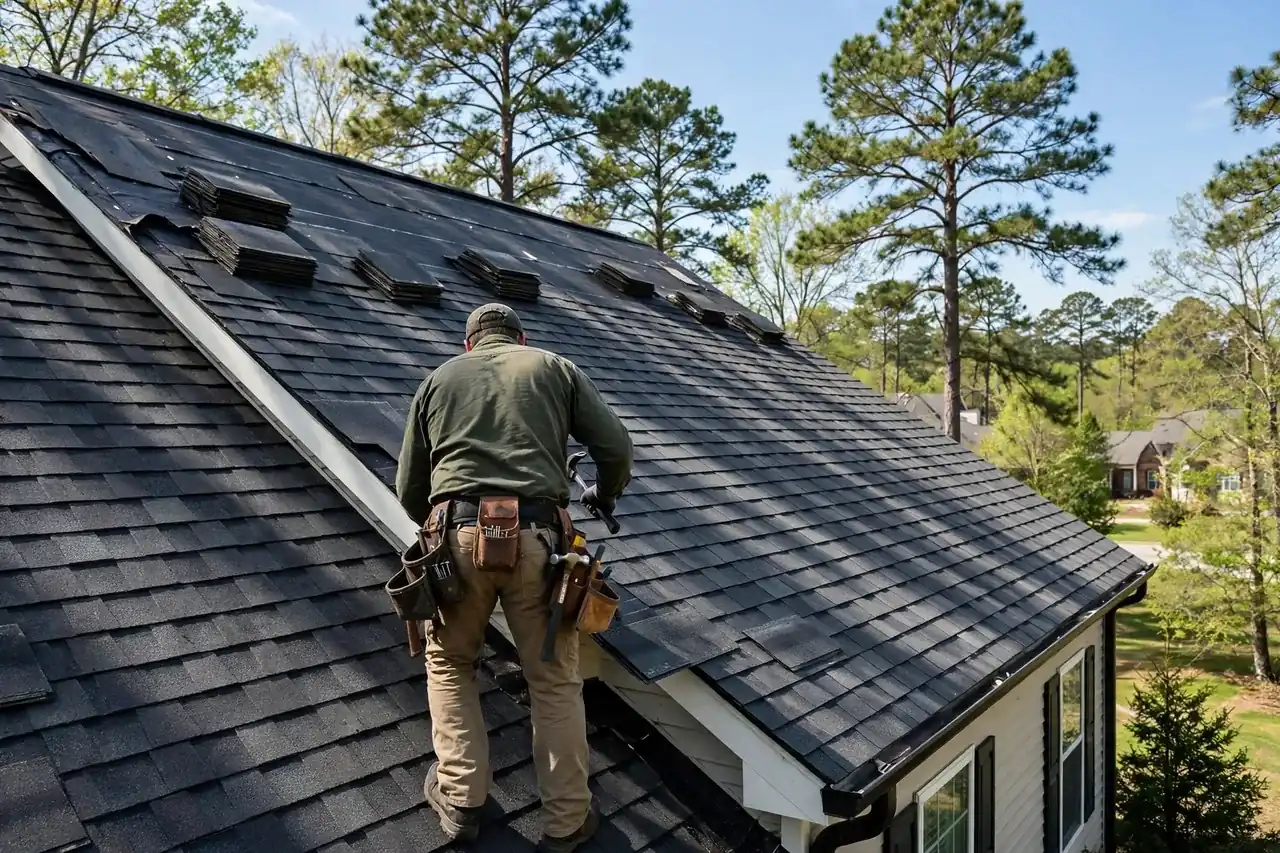
For emergency roof repair Douglasville GA, Finnegan Services LLC provides emergency roof repair during business hours, for active leaks, missing shingles and storm damage that has opened a roof. Emergency work is triage first: stop the water, document the damage, then scope the permanent repair. No next-business-day or weekend service is claimed. Georgia issues no state roofing licence (O.C.G.A. § 43-41-17 exemption); a state contractor licence is required only over $2,500 or beyond the roofing specialty. See what to check before hiring a roofer.
An emergency scope covers the first hours only: make the roof safe, stop active water, tarp the open slope, photograph everything, and write the permanent-repair scope next. Emergency here means triage within office hours, Monday to Friday, 8 a.m. to 5 p.m.
Full roof inspection
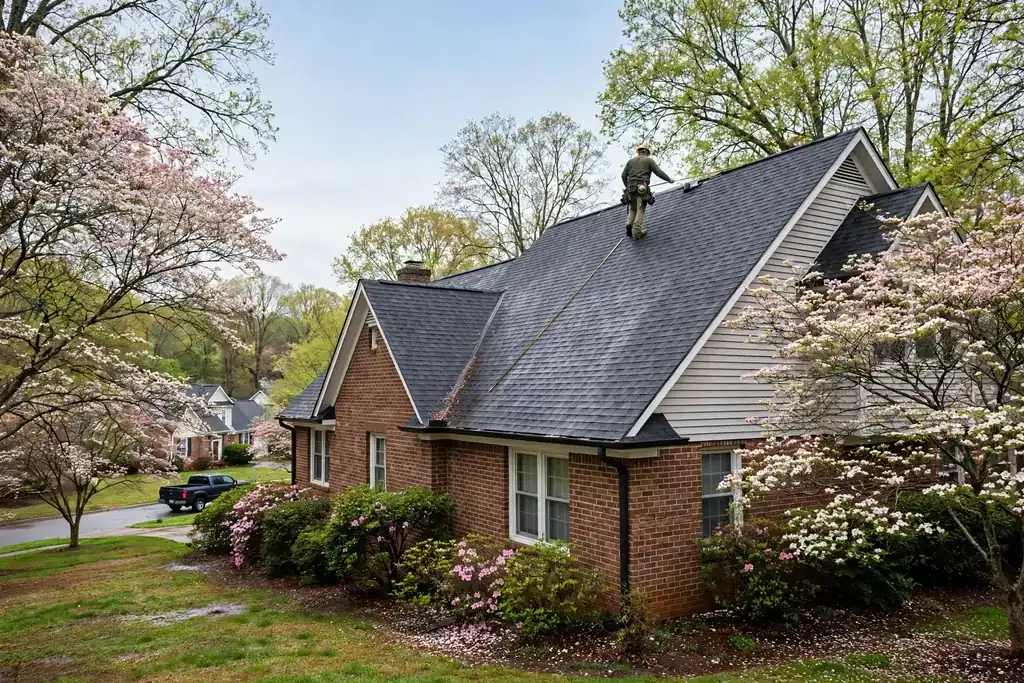
A full roof inspection, walking the roof and attic where safe, checking shingles, flashing, valleys and decking, and tracing the water path, so the emergency scope is based on findings, not on the stain alone.
Active leak tarping
Active leak tarping during business hours, with the roof covered and interior water controlled, so the next rain does not add deck damage while the permanent repair is scoped.
Shingle and flashing repair
Shingle and flashing repair as the permanent work, matched to the existing colour and profile where the line is still in production, with underlayment and flashing renewed where they have failed.
Damage documentation
Damage documentation with photos, measurements and a written scope, so an insurance file starts from the same record as the repair, without any outcome promise or deductible waiver.
Interior water control
Interior water control, including moving furniture and electronics, bucketing drips, and cutting power at the breaker if water is near a ceiling fixture, with safety advice given on the call.
Permanent repair plan
A permanent repair plan in writing, separating urgent items from items that can wait for better conditions, with the price agreed before permanent work starts.
Homes and businesses.
The approach is the same for a home and a business; access, schedule and paperwork are what change.
For homeowners
For homeowners, an emergency scope covers tarping, interior water control, damage documentation and a permanent repair plan, with the written scope separating the emergency stabilisation from the permanent work.
Ceiling stain spreading
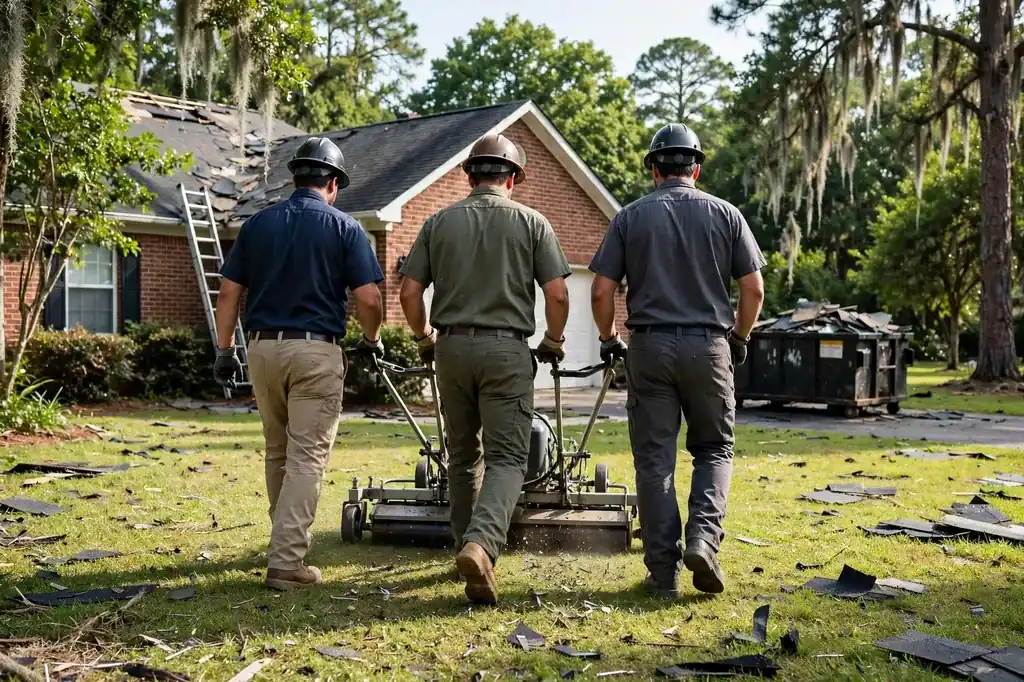
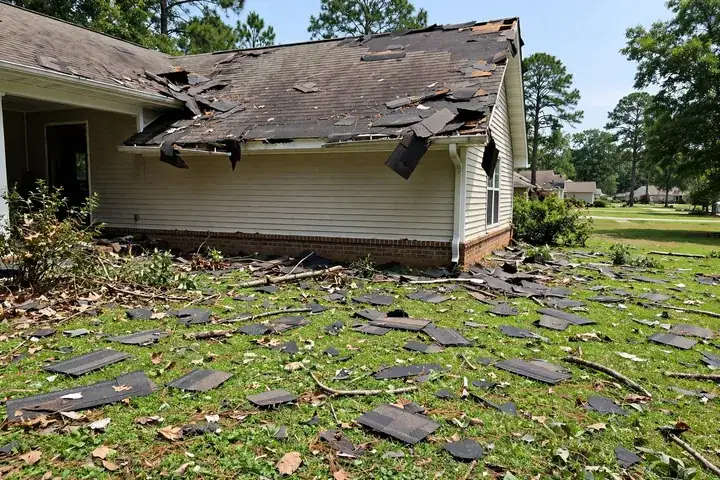
Shingles in the yard
Drip near a light fixture
For businesses
For businesses, emergency work adds drainage, penetration and rooftop-gear checks, with a photo file for managers and insurers, and work scheduled around operations during business hours.
Leak over retail space
Tenants reporting drips
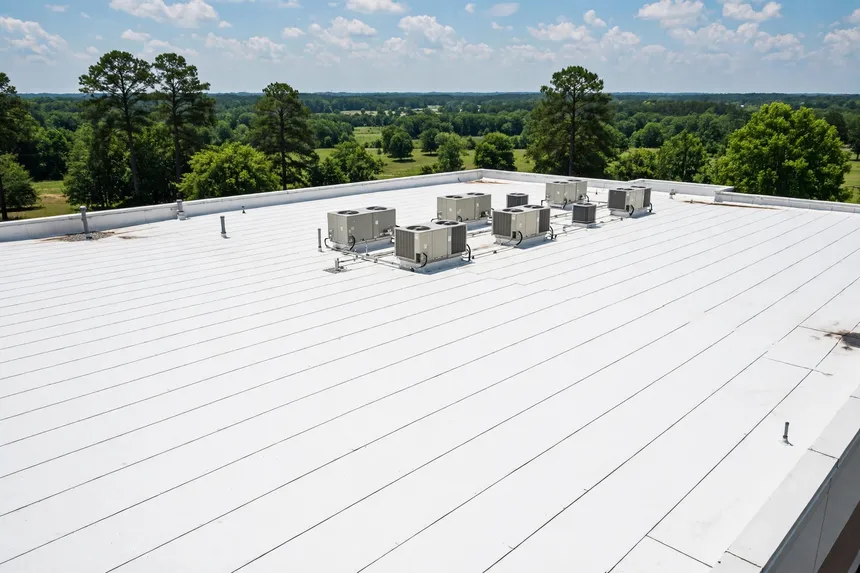
Flat roof ponding after rain
Emergency roof repair Douglasville GA: what actually happens
Triage during business hours, then a permanent repair scoped in writing.
Emergency roof repair in Douglasville, GA starts with stabilisation: tarping an opened roof, controlling interior water, and documenting damage with photos and measurements, so the permanent repair and any insurance file start from the same record. Permanent repairs need dry conditions, because sealants and flashing adhesives do not cure properly on a wet surface, so a tarp may come first and the permanent repair follows in the next dry window, during business hours.
The county's emergency drivers are dated, not generic: the 7 March 2008 EF1, the 3 May 2021 EF1 from Bill Arp to Chapel Hill, quarter-size hail on 7 August 2023, and the 21 September 2009 flood, with over 18 inches overnight. After any such event, the first call should record the date, the damage seen, and photos from the ground, and no one should climb on a wet roof. Related services: storm damage roof repair, roof repair, leak detection and repair. Local pages: Bill Arp and Dorsett Shoals.
Find the entry point, stop the water, then repair the roof so it holds.
What it is
Urgent work that stops an active roof leak and secures storm-damaged shingles before water spreads.
When you need it
Water is entering the home, shingles are missing, or a storm just damaged the roof.
What to expect
An inspection, tarping during business hours, damage photos, and a quoted plan for the permanent repair.
What to expect when you call
What to expect when you call during business hours.
Call triage
Call triage during business hours records the leak, the damage, the storm date if known, and safety advice: move furniture, bucket the drip, cut power if water is near a fixture, and do not climb on a wet roof. After-hours messages are returned on the next business morning.
Call triage
Describe damage
Set timing
On-site inspection
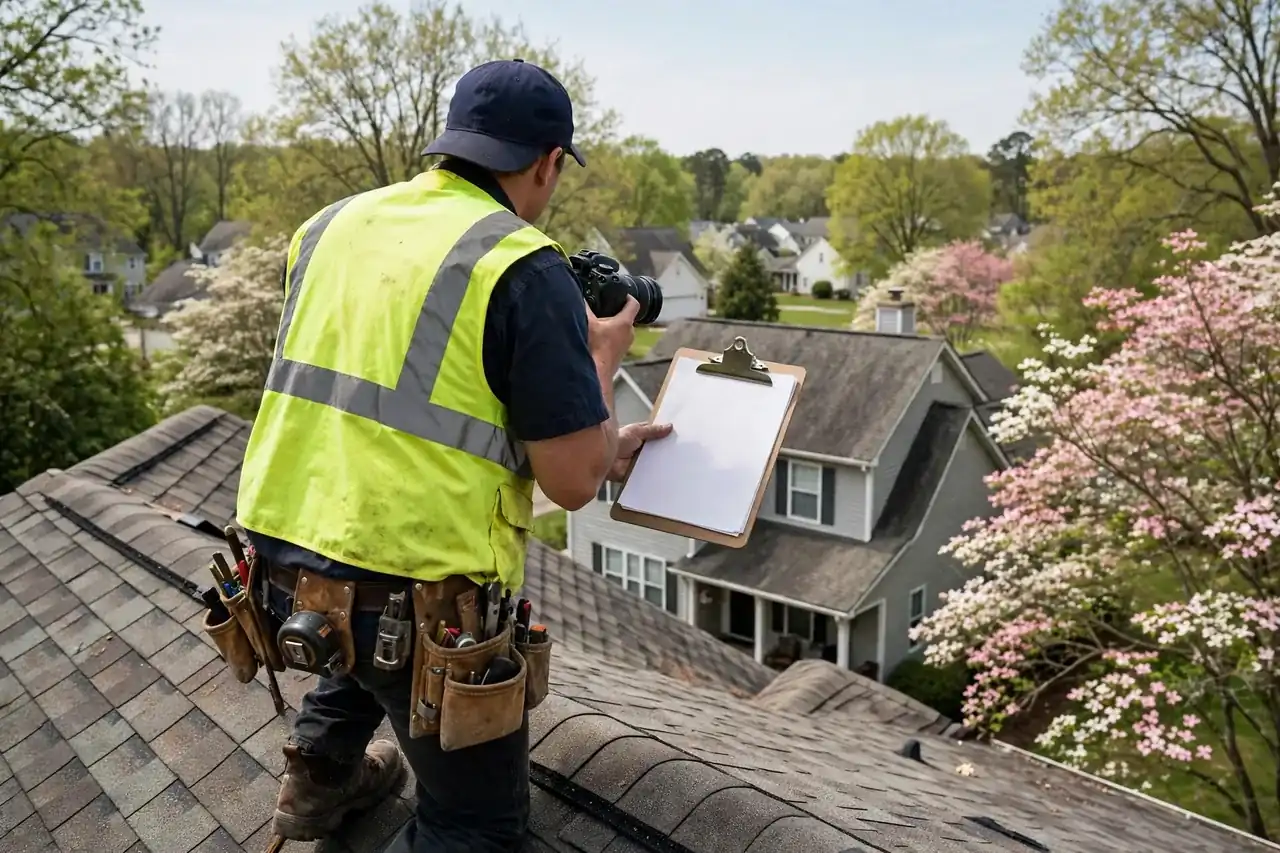
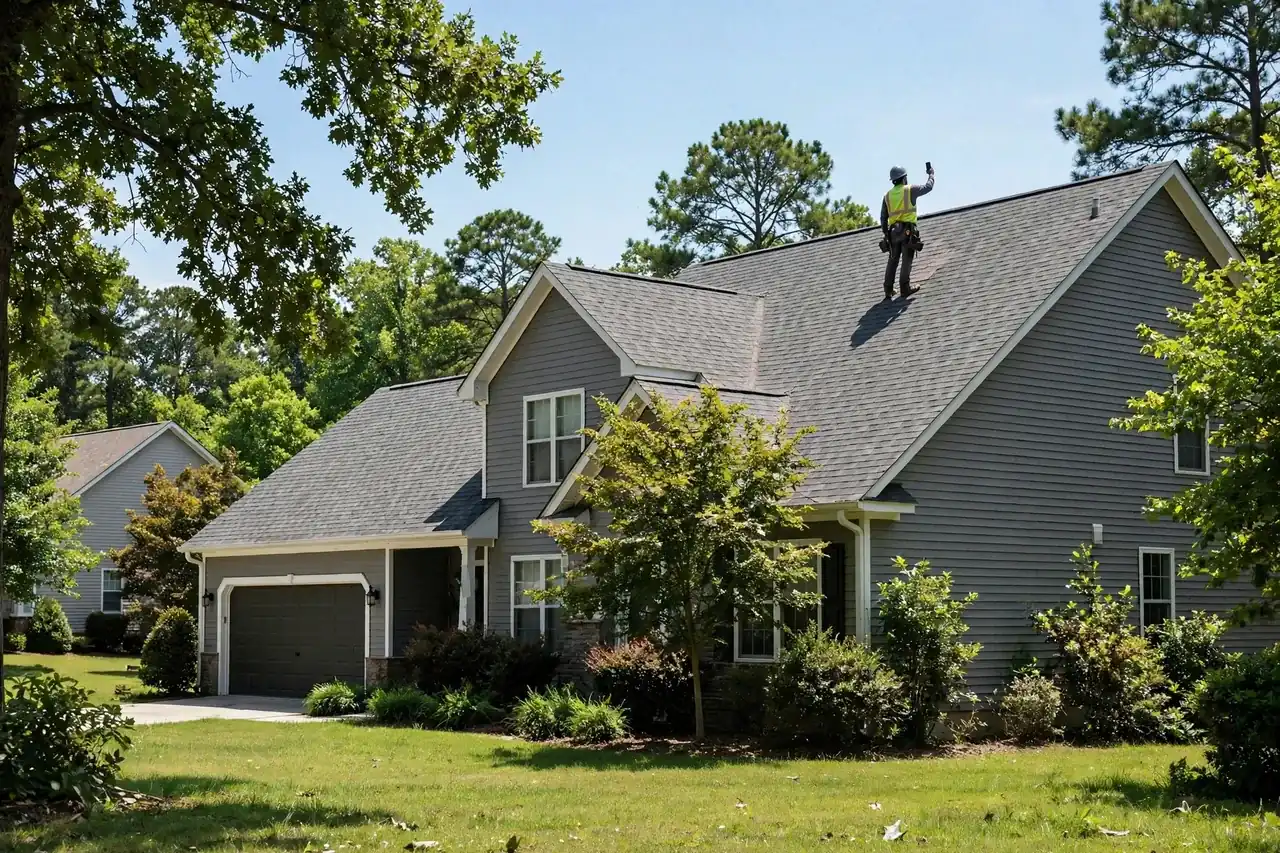
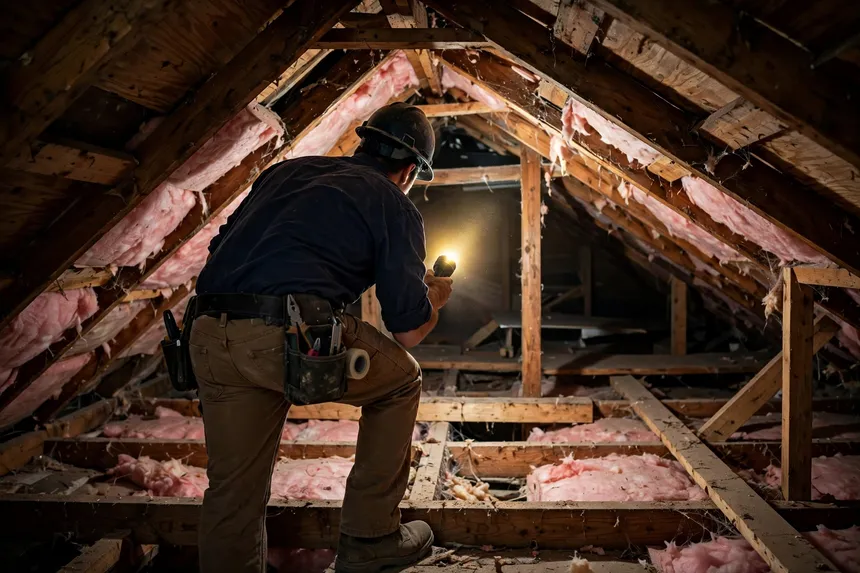
On-site inspection, where safe, walks the roof and attic, traces the water path, and photographs shingles, flashing, valleys and decking, so the scope rests on findings.
Walk the roof
Read moisture
Explain findings
Emergency stabilization
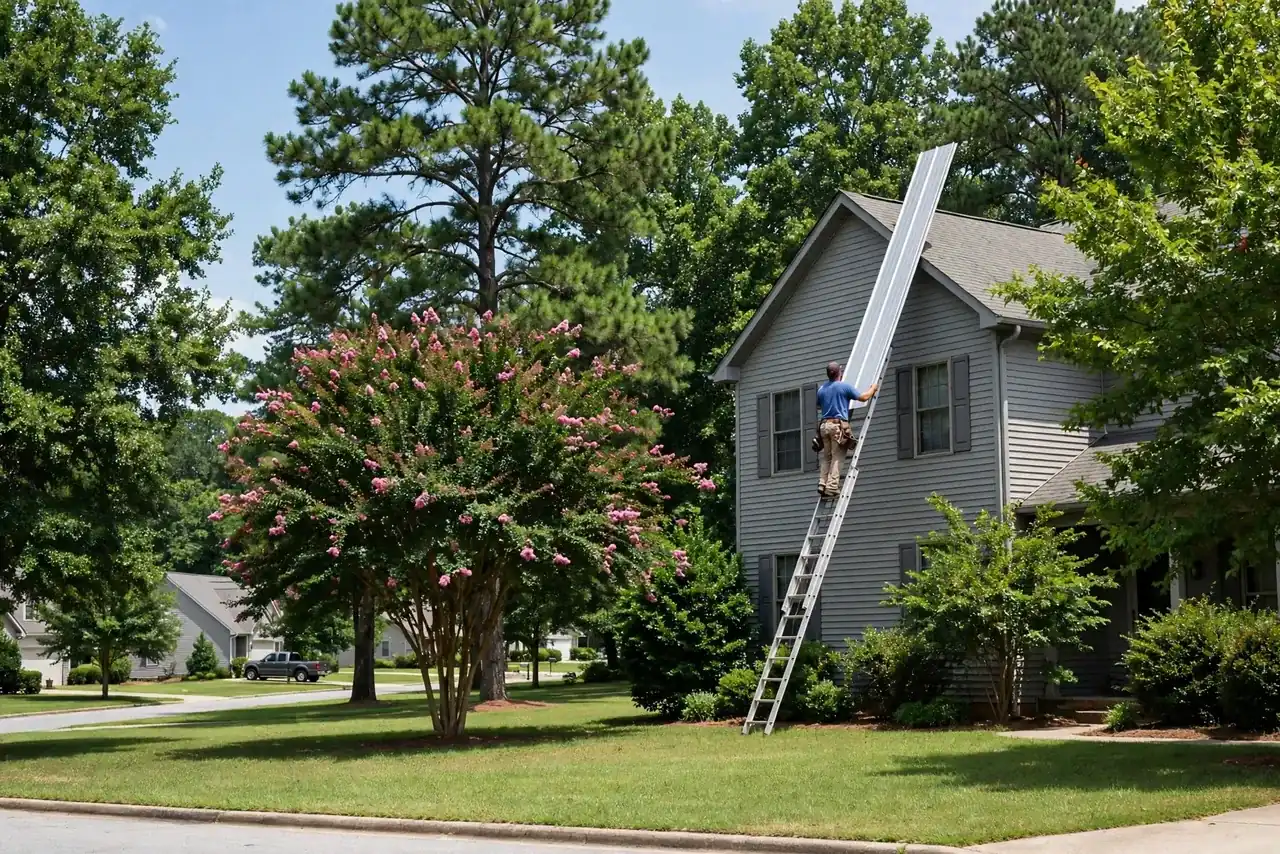
Emergency stabilisation tarps the opened roof and controls interior water, so the next rain does not add deck damage while the permanent repair is scoped.
Tarp the area
Seal flashing
Photograph before
Permanent repair quote
A permanent repair quote lists the repair, the materials and any surrounding work, priced from the findings, with urgent and deferrable items separated, and no outcome promise attached.
Quote the fix
Order materials
Schedule repair
Repair and final check
Repair and final check completes the permanent work in a dry window, magnet-sweeps, clears gutters, hauls debris, and walks the roof against the written scope and photo log.
Complete repair
Water-test
Clean the site
Tools and methods we use on every call
Move across a circle, or focus it and press Enter, for an illustrative thermal view of the photograph.
Infrared camera
Reads temperature differences in the ceiling and attic to show where water is trapped behind drywall, which narrows the search for the entry point.
Moisture meter
Confirms whether insulation, decking, and framing are wet, and tracks how far moisture has spread from the leak.
Roofing nail gun and roofing hammer
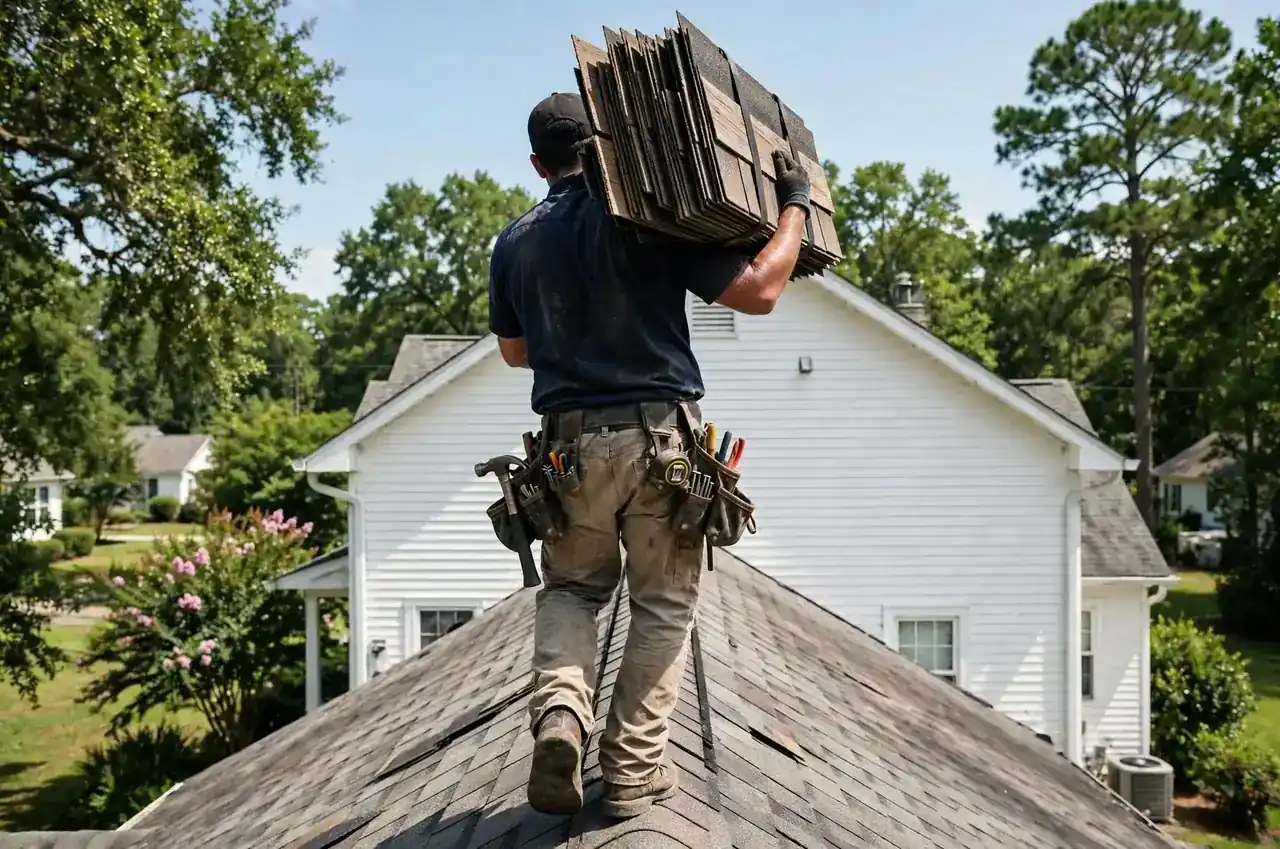
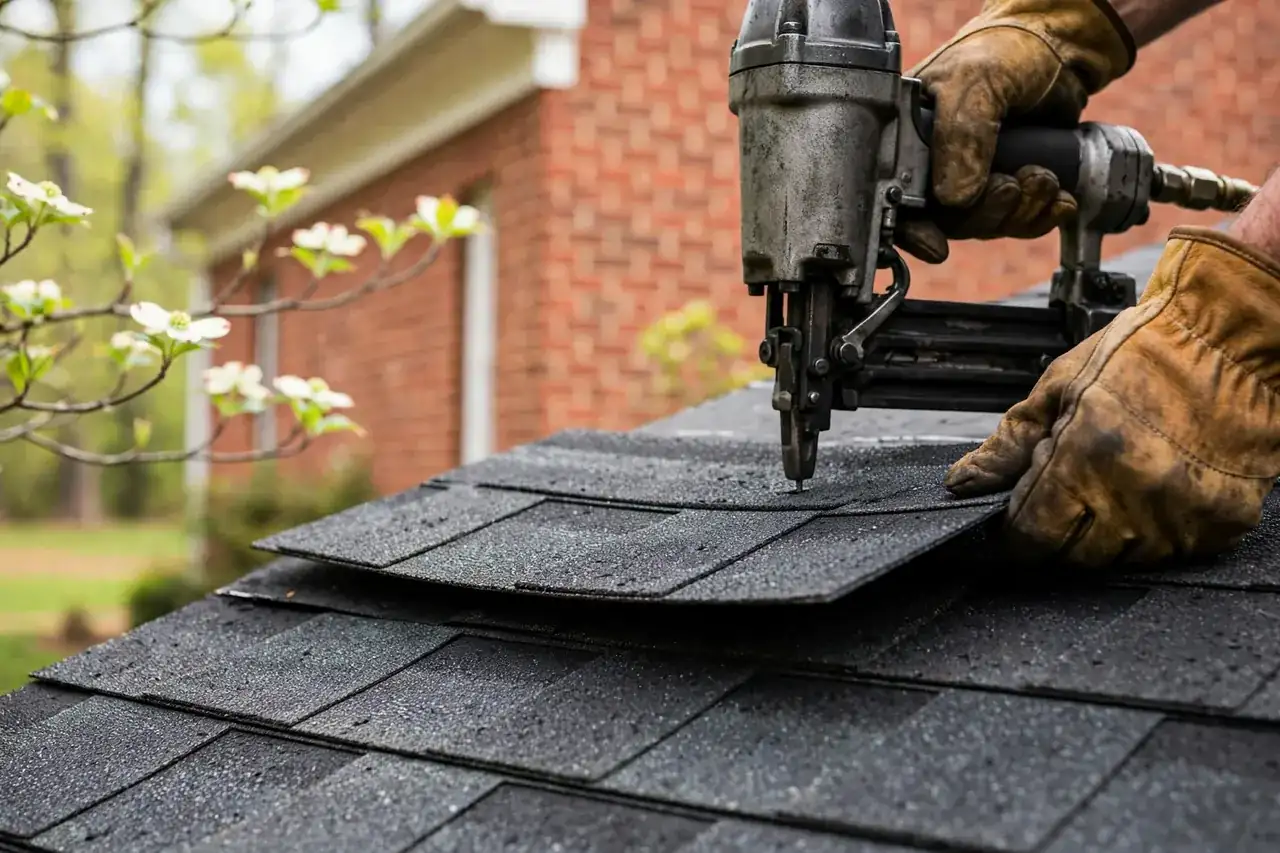
Fastens replacement shingles and secures tarp edges so the temporary cover holds through wind and rain.
Pry bar and shingle cutter
Lifts damaged shingles and flashing without tearing the surrounding roof, and cuts replacement material to fit.
Safety harness and roofing ladder
Keeps crews anchored on steep, wet slopes, which is standard practice on every Douglasville roof we walk.
Thermal views are illustrative, generated from the photographs.
Methods
Chalk line
Keeps replacement shingle courses straight so the repaired area matches the existing roof lines.
Leaf blower
Clears granules, leaves, and debris from gutters and the driveway before we leave the property.
Moisture mapping
We combine infrared readings with a moisture meter to map how far water has traveled. That tells us whether the leak is isolated or whether insulation and drywall need to come out.
Water testing
After a repair, we run water over the fixed area while watching from inside the attic. If it stays dry, the repair is done. If not, we keep working until it is.
Flashing rebuild
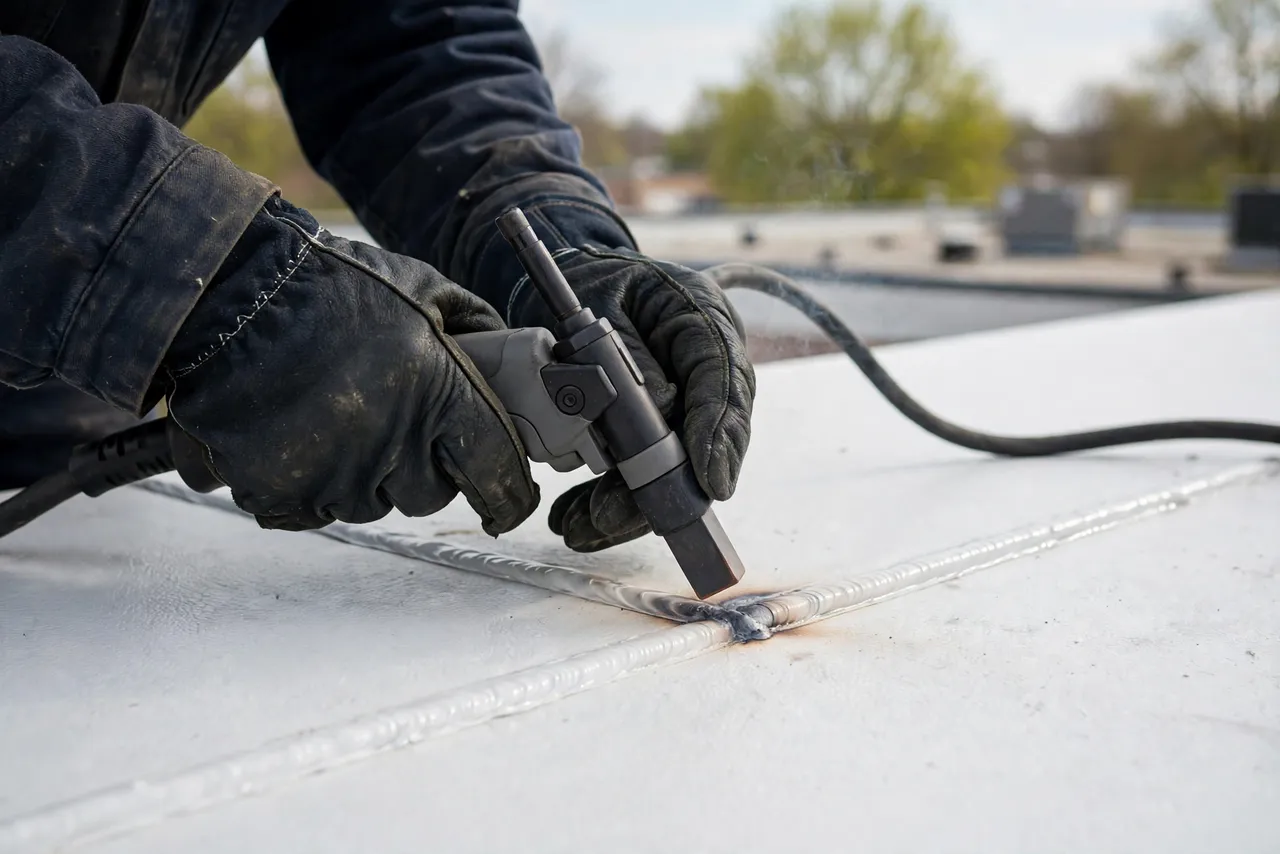
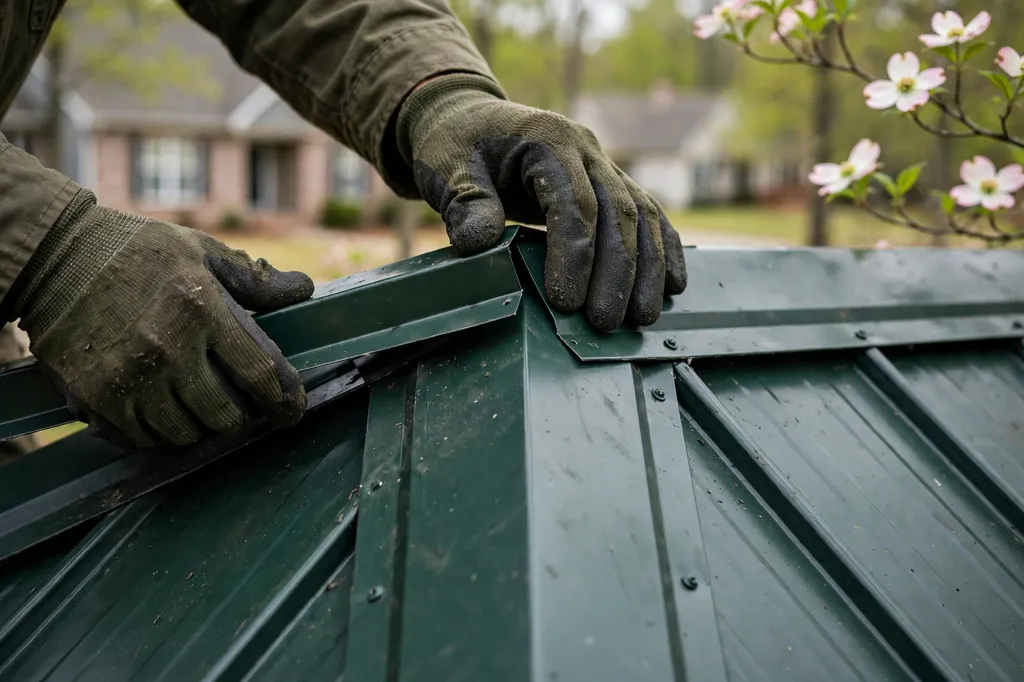
We do not just caulk over failed flashing. We rebuild it with new material at chimneys, walls, and penetrations, then seal it so the repair outlasts the next storm season.
Manufacturer-matched materials
We match shingles and underlayment to your existing roof using current manufacturer lines products, so the repair keeps the roof system consistent.
When to call for emergency roof repair
Storm shingles
A storm just passed and shingles are in the yard, with rain forecast again tomorrow.
We inspect the damaged slopes, tarp open areas promptly during business hours, and replace missing shingles once the weather clears. We also check the rest of the roof for lifted edges the wind left behind.
Outcome: Your roof is watertight before the next storm, and you have photos for an insurance claim if the damage is widespread.
Ceiling drip
Water is dripping through a ceiling light fixture or running down an interior wall.
We treat this as urgent, walk you through cutting power to the affected circuit, and get a tarp on the roof fast. Then we trace the leak to its source instead of guessing at the stain.
Outcome: The drip stops, the ceiling stops spreading, and you know exactly what failed and what it costs to fix permanently.
Growing stain
You noticed a ceiling stain growing after last week's rain but the roof is not leaking right now.
We inspect during dry weather, use a moisture meter to confirm whether the area is still wet, and check flashing and shingles for the entry point. Dry conditions make leaks easier to find.
Outcome: You get a clear answer on whether it is a small repair or a bigger problem, before the next storm turns it into an emergency.
Hail check
Hail hit your neighborhood and you are not sure whether the roof is damaged.
We inspect for hail bruising, granule loss, and dented soft metals, and document what we find with dated photos. If there is a claim, the record supports it. If not, you know your roof is fine.
Outcome: You either file a supported claim or avoid filing one you do not need, with photos to back up the decision.
Rental leak
A rental property or commercial building has a leak and tenants are calling.
We prioritize occupied properties, tarp the leak quickly, and work around business hours on commercial roofs. Photo reports go to you so you can forward them to owners or insurers.
Outcome: Tenants stop calling, the building stays dry, and you have documentation for the owner and the claim.
Chapel HillDowntown DouglasvilleStewart Mill
How emergency roof repair runs in Douglasville
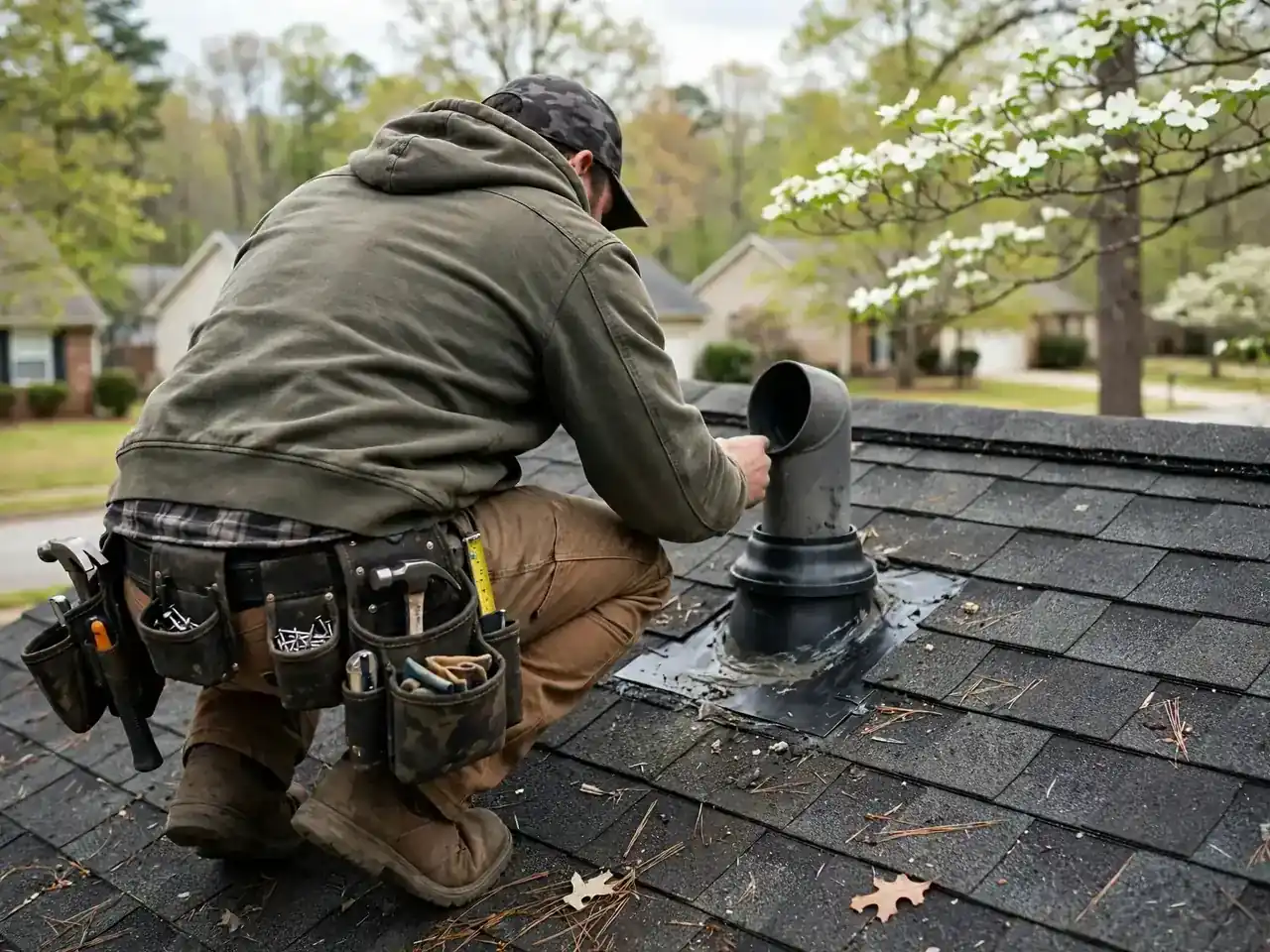
Emergency calls in Douglasville most often involve active ceiling drips, missing or torn shingles, failed flashing, and limb punctures after wind and hail. Exposed underlayment degrades fast in Georgia sun, and the next storm pushes water straight into the deck, so tarping during business hours, not waiting for a dry day to call, is the right first step, with the permanent scope following inspection.
Permit requirements differ between City of Douglasville addresses and unincorporated Douglas County addresses, and are confirmed for your parcel before quoting; no permit fee or definitive trigger is published here. An ice barrier is not code-required in Douglasville: the IRC trigger is a January mean of 25°F or below, and Douglasville's January mean is about 42°F, so self-adhered membrane in valleys and at penetrations is offered only as an optional system upgrade, never as code. Georgia issues no state roofing licence (O.C.G.A. § 43-41-17 exemption); a state contractor licence is required only over $2,500 or beyond the roofing specialty. See what to check before hiring a roofer.
Georgia code does not require an ice barrier in Douglasville at eaves and valleys, and we rebuild those details correctly instead of skipping them.
Chapel Hill: Hail and wind hit this area hard in spring. We see a lot of granule loss and lifted shingle tabs on south-facing slopes here.
Downtown Douglasville: Older homes with original chimney flashing and skylights are common. Flashing failure, not shingles, causes most of the leaks we find.
Stewart Mill: Steep, multi-plane roofs mean leaks show up inside far from the actual breach. Moisture mapping matters more than a visual check here.
Post Road: Newer construction with architectural shingles. Storm damage tends to be isolated to ridge caps and wind-exposed edges.
Lithia Springs: A mix of older shingle roofs and metal. We check fasteners and panel seams on metal roofs after temperature swings.
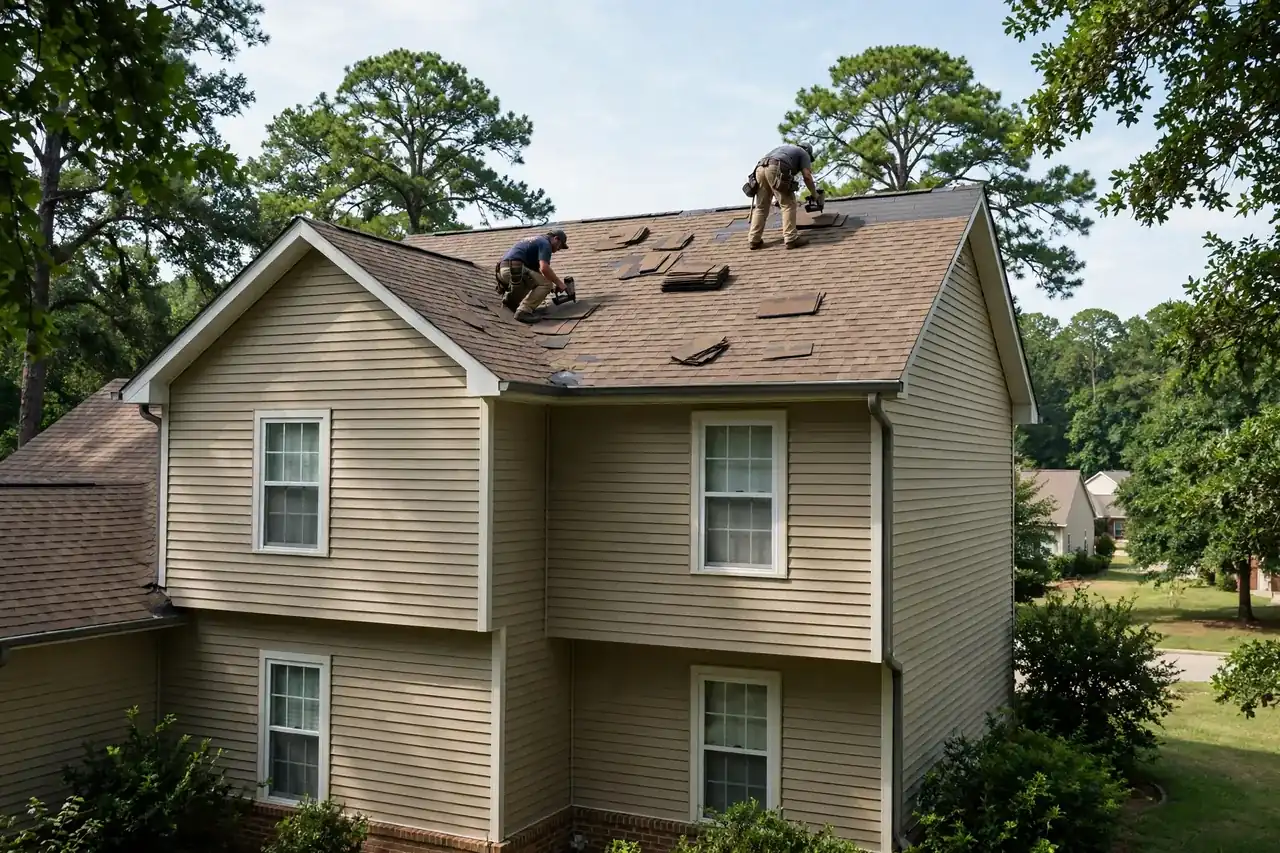
Summer thunderstorms with straight-line wind: Wind lifts shingle tabs and tears off ridge caps, opening the roof to the rain that follows within minutes. During business hours tarping is usually the difference between a repair and a ceiling replacement.
We walk the roof and attic, then explain what we found.
We lay tarps and set up so your interior stays protected.
We water-test the repair and tell you the next step.
From problem to finished result.
IllustrativeThe thermal view is generated from the photograph. It is not a measurement. Drag the handle, or use the arrow keys once it is focused.
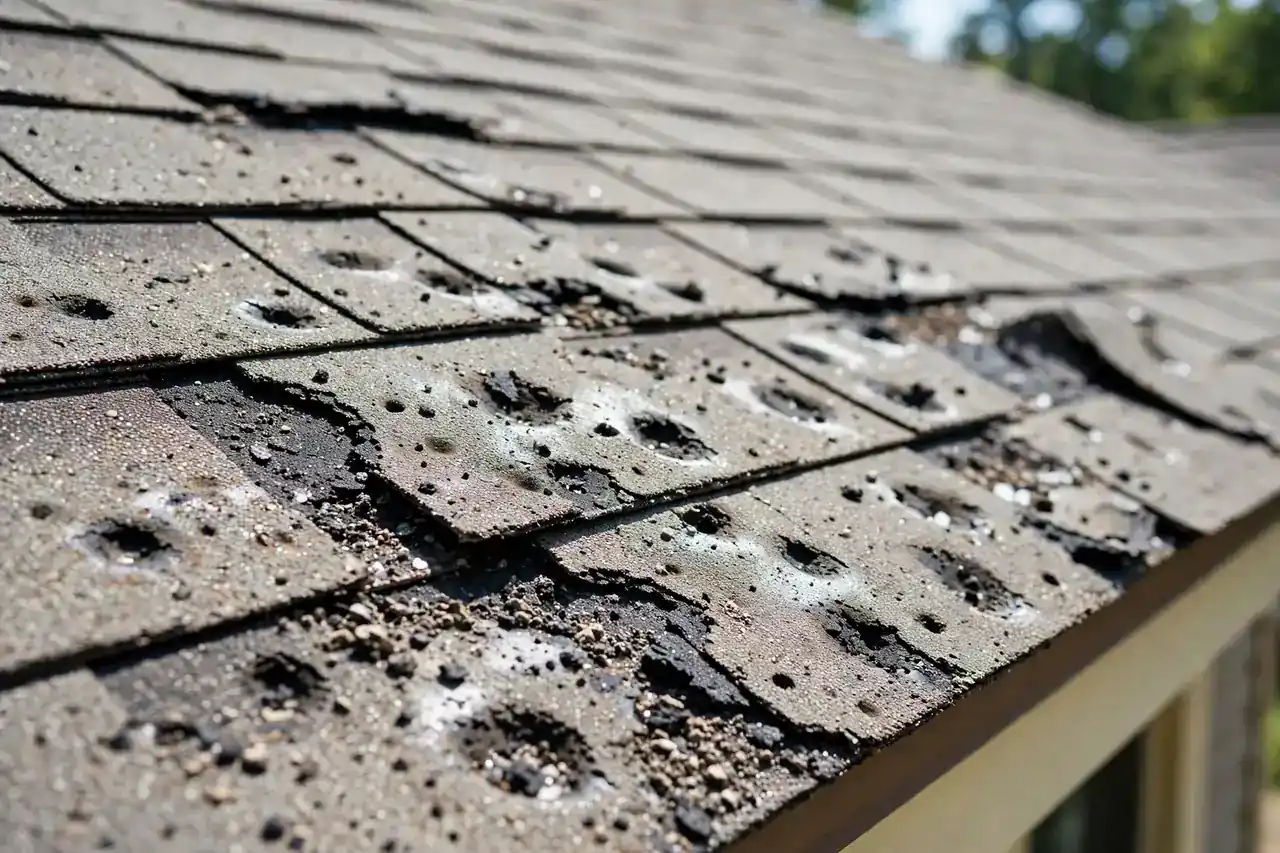
Hail-punched roof in Chapel Hill
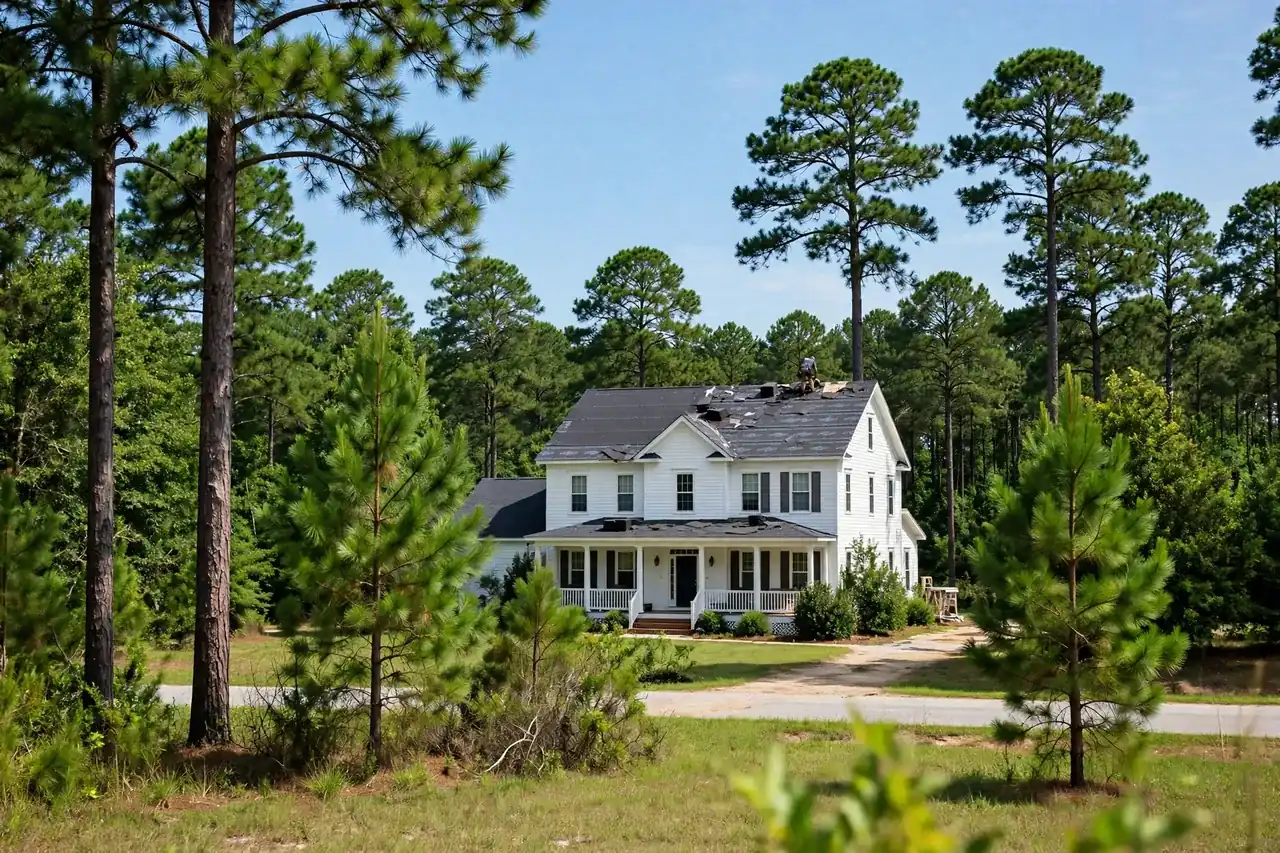
Before: A Tuesday night hail storm bruised three slopes and knocked granules into the gutters. The homeowner found shingle pieces in the yard Wednesday morning and water was already staining the attic decking near the ridge.
After: We tarped the open areas by 10 a.m., documented the hail damage with dated photos, and replaced 6 squares of matching architectural shingles that Friday. The attic stayed dry through the next storm.
We recommended a post-storm inspection each spring and cleaning the gutters twice a year to keep granules and debris from backing water under the eaves.
Chimney leak in Downtown Douglasville
Before: Water was dripping through a kitchen ceiling at 11 p.m. The homeowner thought the shingles had failed, but the roof surface looked intact. The stain had grown from a dinner-plate spot to a steady drip over three days.
After: We traced the leak to failed chimney flashing with a moisture meter and infrared camera, tarped it that night, and rebuilt the flashing and counter-flashing the following week. A hose test confirmed the ceiling stayed dry.
We told the homeowner to check the flashing sealant each fall and to keep the chimney cap clear so water does not pool at the base.
Wind-torn ridge caps near Arbor Place
Before: A straight-line wind event tore ridge caps off two rental properties. Rain was forecast for the next afternoon, and the property manager needed both roofs protected before tenants noticed ceiling stains.
After: We tarped both roofs promptly during business hours, replaced the ridge caps and 4 squares of shingles within a week, and sent photo reports for the insurance file. Neither unit had interior damage.
We set up a twice-a-year maintenance check on both properties to catch lifted shingles and clogged gutters before the next storm season.
Roof problems we fix after Douglasville storms
Most emergency calls come down to a handful of failures. Knowing which one you have tells you how urgent the repair is and whether you should be filing an insurance claim.
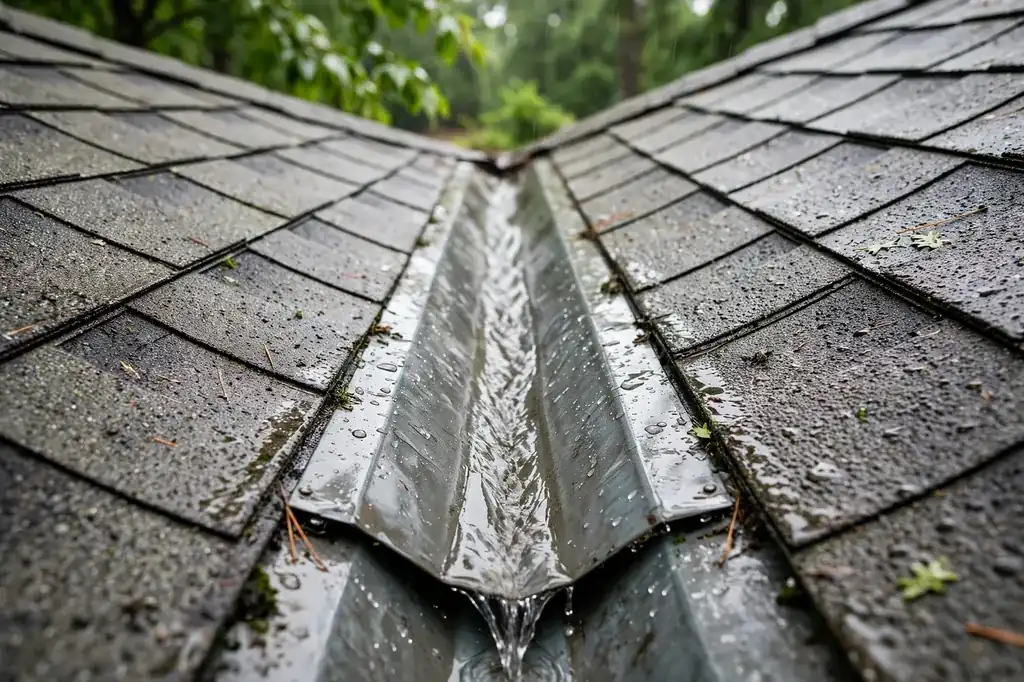
Active leakActive roof leak during heavy rainWater soaks insulation and drywall within hours, and a small stain can mean a much larger wet area above the ceiling. We tarp the leak promptly during business hours, trace the entry point with a moisture meter and infrared camera, and stop the water before it reaches framing. Permanent repair is scheduled once the roof is dry.
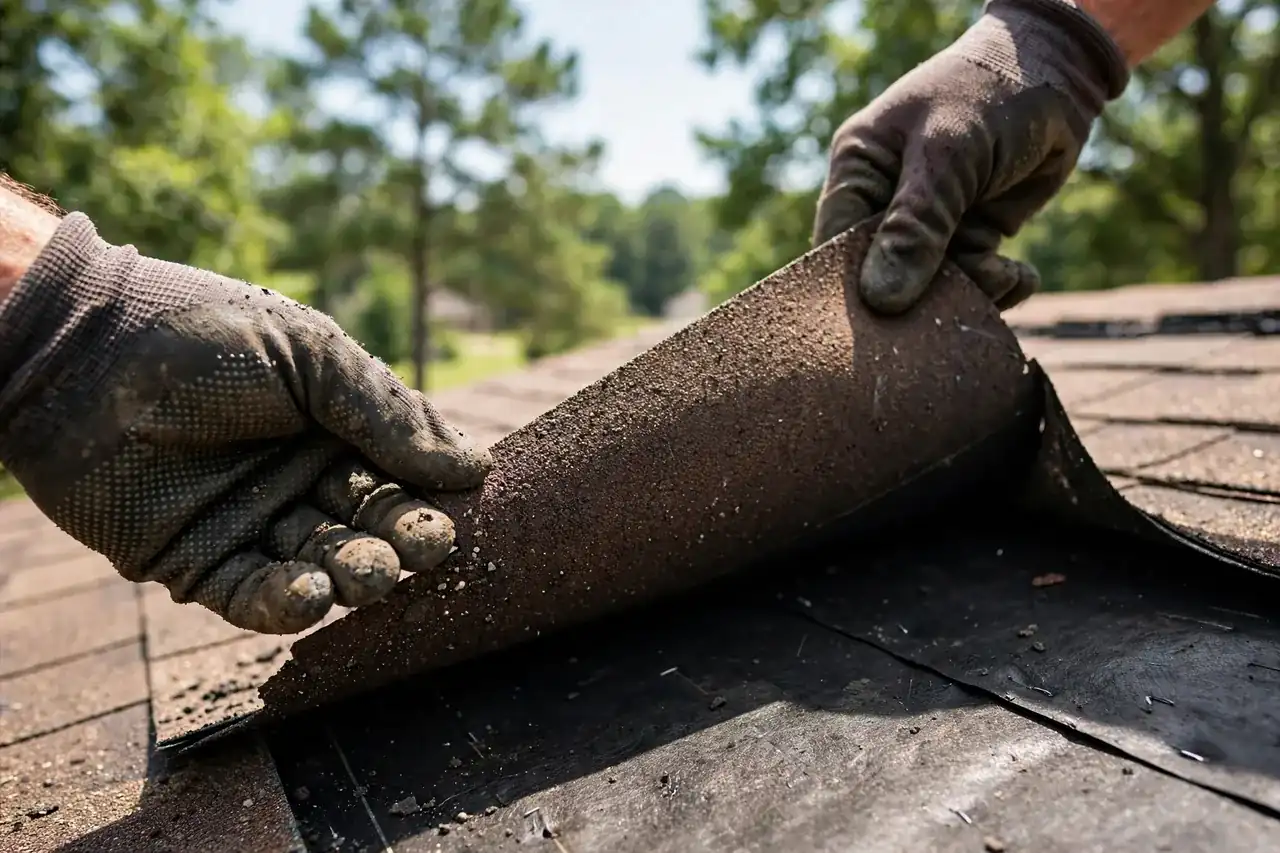
Missing shinglesMissing or wind-lifted shinglesExposed underlayment degrades fast in Georgia sun, and the next storm pushes water straight into the deck. We replace missing shingles, renail lifted tabs, and check the whole slope for edges that will catch wind. Matching shingles come from current manufacturer lines depending on your existing roof.
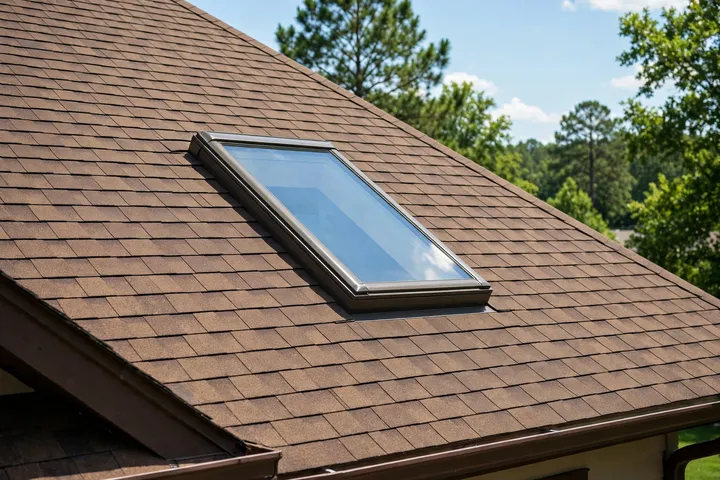
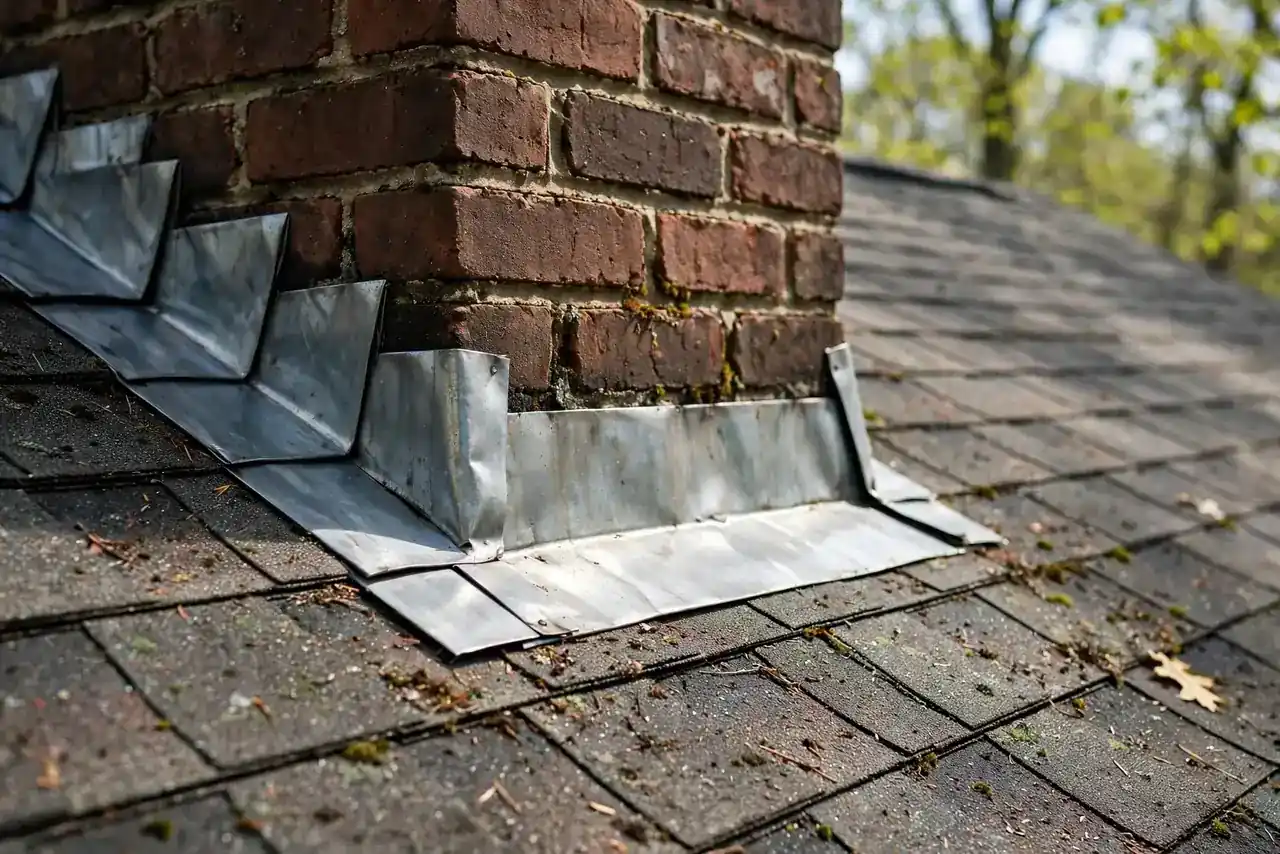
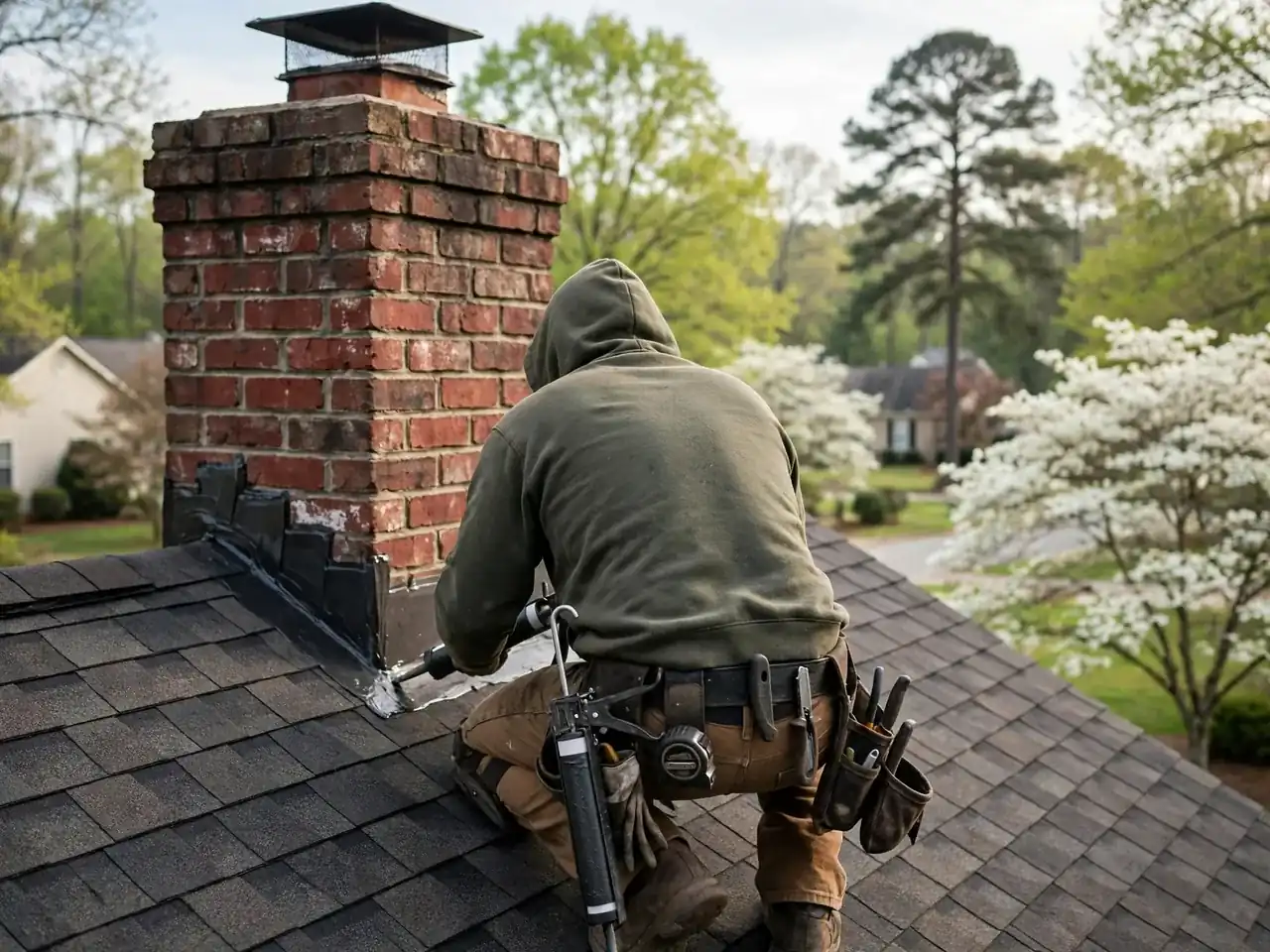
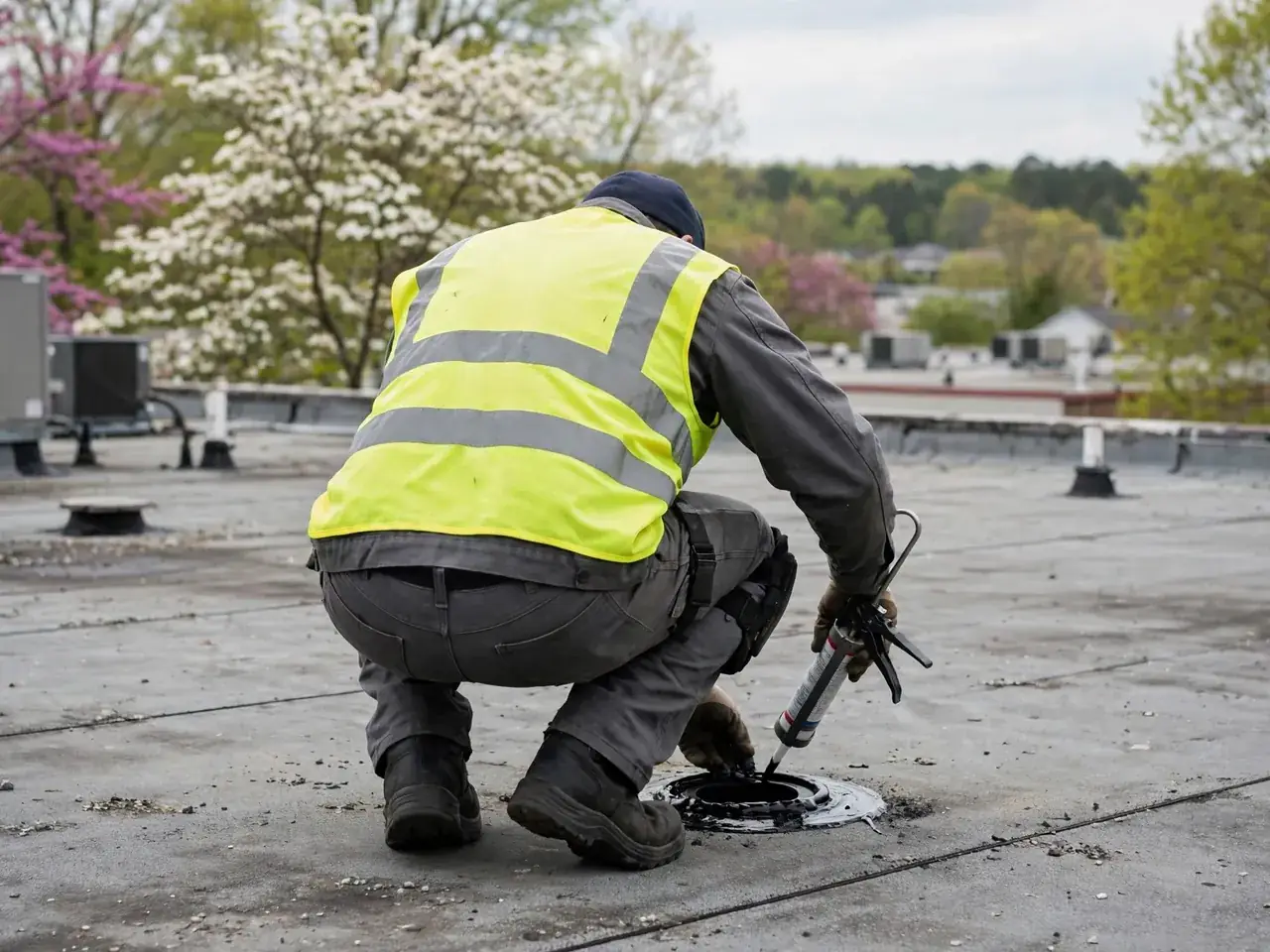
Chimney leakChimney and skylight leaksFlashing failure lets water run behind siding and into the attic, where it rots framing and feeds attic condensation. We rebuild flashing and counter-flashing, reseal skylight curbs, and water-test the repair before we leave. This is one of the most common emergency calls we run in Douglasville.
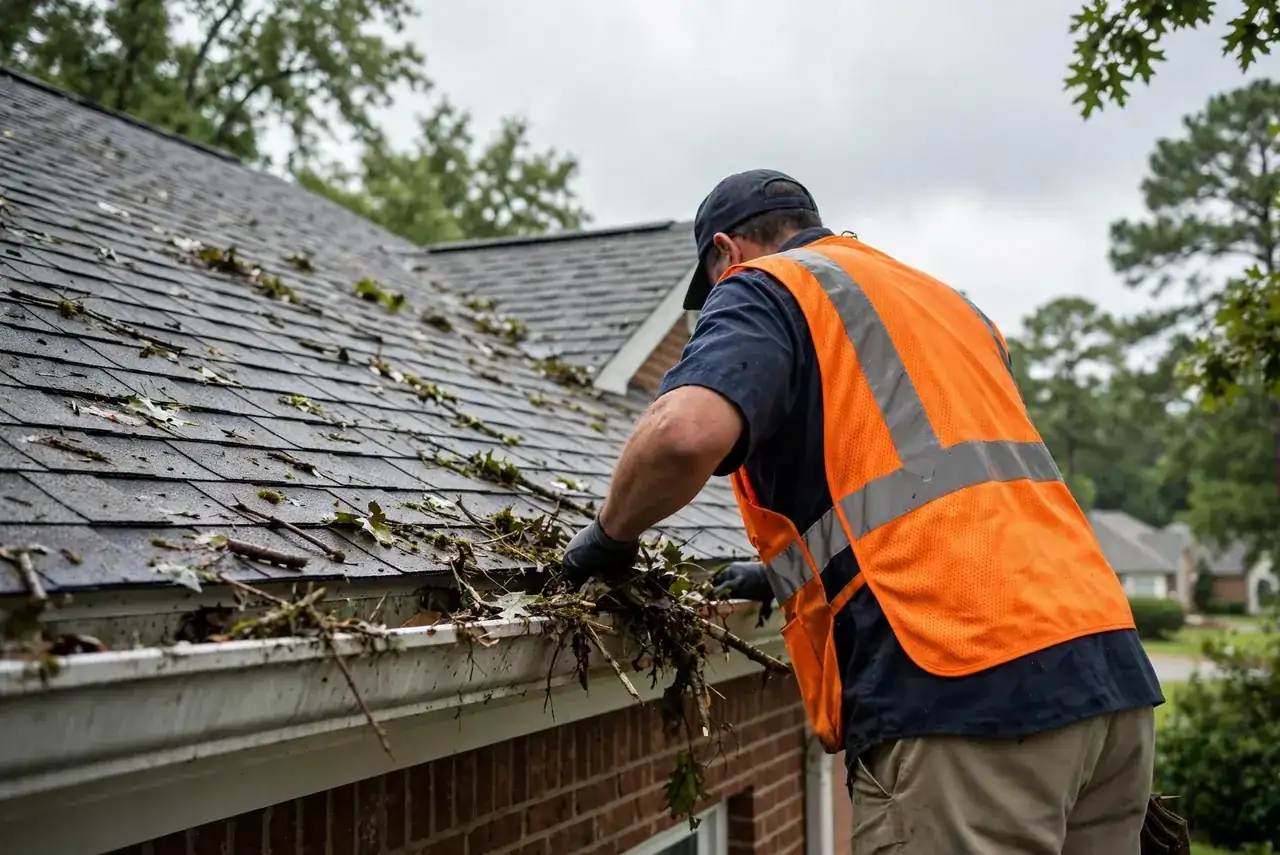
Gutter backupClogged gutters backing water under eavesWater trapped at the roof edge rots fascia and soffit, then works its way into the wall cavity and insulation. We clear gutters and downspouts, check for fascia rot, and repair damaged sections. Keeping runoff moving away from the house prevents the leak from returning.
Hail bruisingHail bruising and granule lossBruised shingles lose their protective granules and age years faster, even when the roof is not leaking yet. We document hail damage with dated photos, repair or replace affected slopes, and give you a record you can use for an insurance claim before the damage worsens.
Why homeowners call us first
Emergency work is judged by what it stops, not by what it promises.
During business hours tarping
Tarping during business hours stops active water from adding deck damage while the permanent repair is scoped. It is triage, not the cure, and the scope says so plainly, with the permanent work listed separately.
Leak found, not guessed
A leak is traced with a moisture meter and infrared camera where needed, because water travels along rafters before it drips, so the stain is rarely under the failure. Finding the source first keeps the permanent repair from sealing the wrong place.
Storm documentation
Photos, measurements and a written scope support an insurance file after a storm. A roofer may document, meet the adjuster on site and provide a line-item estimate, but may not negotiate the claim, promise an outcome, or waive a deductible.
Permanent fix scheduled
Once the roof is dry, the permanent repair is scheduled in writing, with matching shingles where the line is still in production, and the scope, not a timing guarantee, is what defines the timing.
What you receive
An emergency call leaves a written record of what was made safe.
Damage photos
Photos of the damage before tarping or boarding.
Tarp and safety record
What was covered, what remains open, and what to avoid.
Permanent-repair scope
Next steps for the permanent repair, in writing.
Claim-ready notes
Measurements and photos kept for any insurance file.
Triage versus permanent repair
Emergency work stops the water. Permanent repair restores the roof. Knowing the difference helps you plan.
Emergency visit
During business hours stabilization of an active leak
Tarp the slope
Seal open flashing
Photograph damage
Permanent repair
Restores the roof system after drying
Replace shingles
Rebuild flashing
New underlayment
Maintenance
Keeps small issues from becoming emergencies
Clear the gutters
Check flashing
Inspect after storms
Materials and systems we work with
Asphalt shingles
Architectural shingles
Standing seam metal
Metal panels
TPO membrane
EPDM membrane
Self-adhered membrane
Ridge vent
Service ZIP codes.
Emergency triage runs across 30134 and 30135 during office hours, Monday to Friday, 8 a.m. to 5 p.m. Outside those ZIP codes, call and we will confirm coverage.
They were very responsive and answered all my questions while making me feel at ease. I would highly recommend their services.
Questions we hear on emergency calls
Finnegan Services LLC handles emergency roof repair in Douglasville, GA, during business hours, including active leaks, missing shingles and storm damage across Douglas County. Call +1 678-751-2052 during business hours, and after-hours messages are returned on the next business morning.
As Oct-2026 published market ranges only, not this business's firm prices: most emergency repairs $400–$1,500, with pitch, damaged area and whether tarping alone or shingle and flashing work is needed driving the scope. Your written scope is priced from the findings, not from a flat rate.
No. Finnegan Services LLC does not claim next-business-day or weekend service. Hours are Monday–Friday 8:00 AM–5:00 PM, Saturday–Sunday closed. During business hours, active leaks are prioritised; after-hours messages are returned on the next business morning, and the call advice covers safety and water control until then.
Move furniture and electronics away from the leak, put a bucket under the drip, and if water is near a ceiling fixture, cut power to that room at the breaker. Do not climb on a wet roof. Take phone photos from the ground and note the storm date, so the inspection starts with a dated record.
Other roofing work we handle
Other services from the same team, each written from the same Douglasville research.
Emergency Roof Repair Douglasville GA — Business Hours
Call Finnegan Services LLC at +1 678-751-2052 for emergency roof repair in Douglasville, GA, during business hours. Active leaks are prioritised, tarping stops further water, and the permanent repair is scoped in writing. Hours: Monday–Friday 8:00 AM–5:00 PM; Saturday–Sunday closed. Finnegan Services LLC, 8635 Park St, Douglasville, GA 30134.
Call us at +1 678-751-2052 or send a message and we will get back to you the same business day. We answer the phone during working hours and return after-hours messages on the next business morning. Storm damage gets priority, so say so when you call.