

For Deer Lick Park Homes
Pocket homes need park-edge scopes: tree permission, debris loads and lake-side shade, priced lot by lot.
- Homes near Mack Road
- Homes near Slater Mill Road
- Homes near Pope Road
- Lake-side shaded slopes
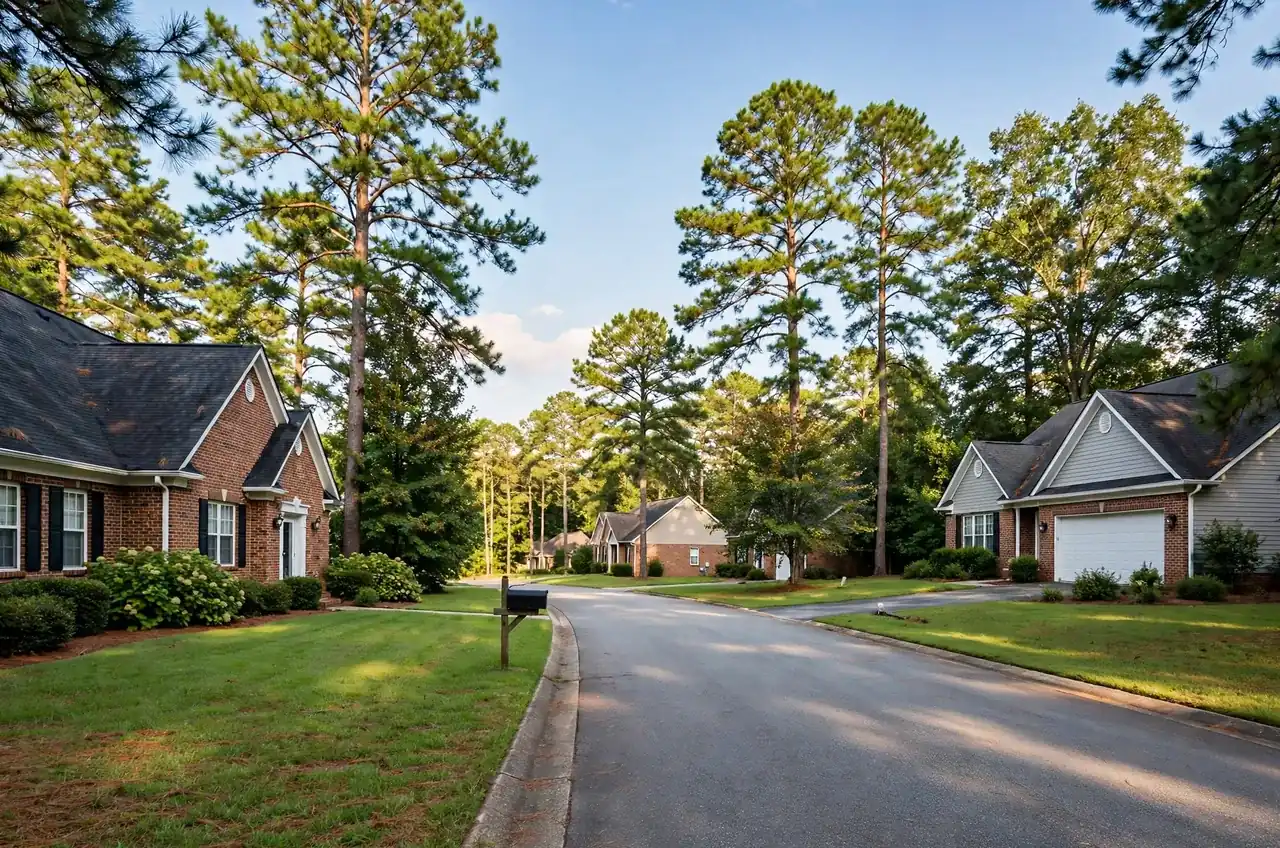
Roofing Deer Lick Park Douglasville GA means working a park-anchored residential pocket, not a named subdivision: the Deer Lick Park area, around the county’s 66-acre park headquarters.
8635 Park St, Douglasville, GA 30134, United States, Douglasville, Georgia
Serving Deer Lick Park area and nearby
Roofing Deer Lick Park Douglasville GA is a park-area page, and it says so in its title and first paragraph. Deer Lick Park area is a park-anchored residential pocket, never presented as a subdivision, and no subdivision name is invented for the pocket. Its research keyword is “roofing Deer Lick Park Douglasville GA”, an area page, not a subdivision page.
The anchor is Deer Lick Park, 2105 Mack Road, Douglasville, GA 30135, on Mack Road north of Fairburn Road. The county describes it as a 66-acre park and headquarters of the Parks and Recreation Division. Surrounding streets are Mack Road, Slater Mill Road to the south, Fairburn Road to the south, and Pope Road. The park inventory is the page’s real content: basketball, batting cages, bocce, disc golf, mini-golf, softball, tennis, volleyball, fishing, picnicking, playground, walking, amphitheatre, activity centre, gymnasium, group shelters, and a 3-acre lake with a pier.
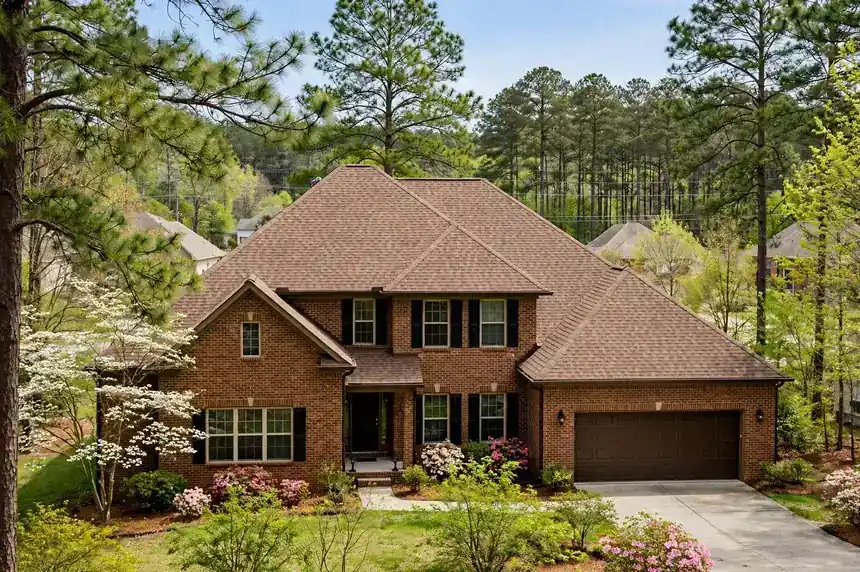
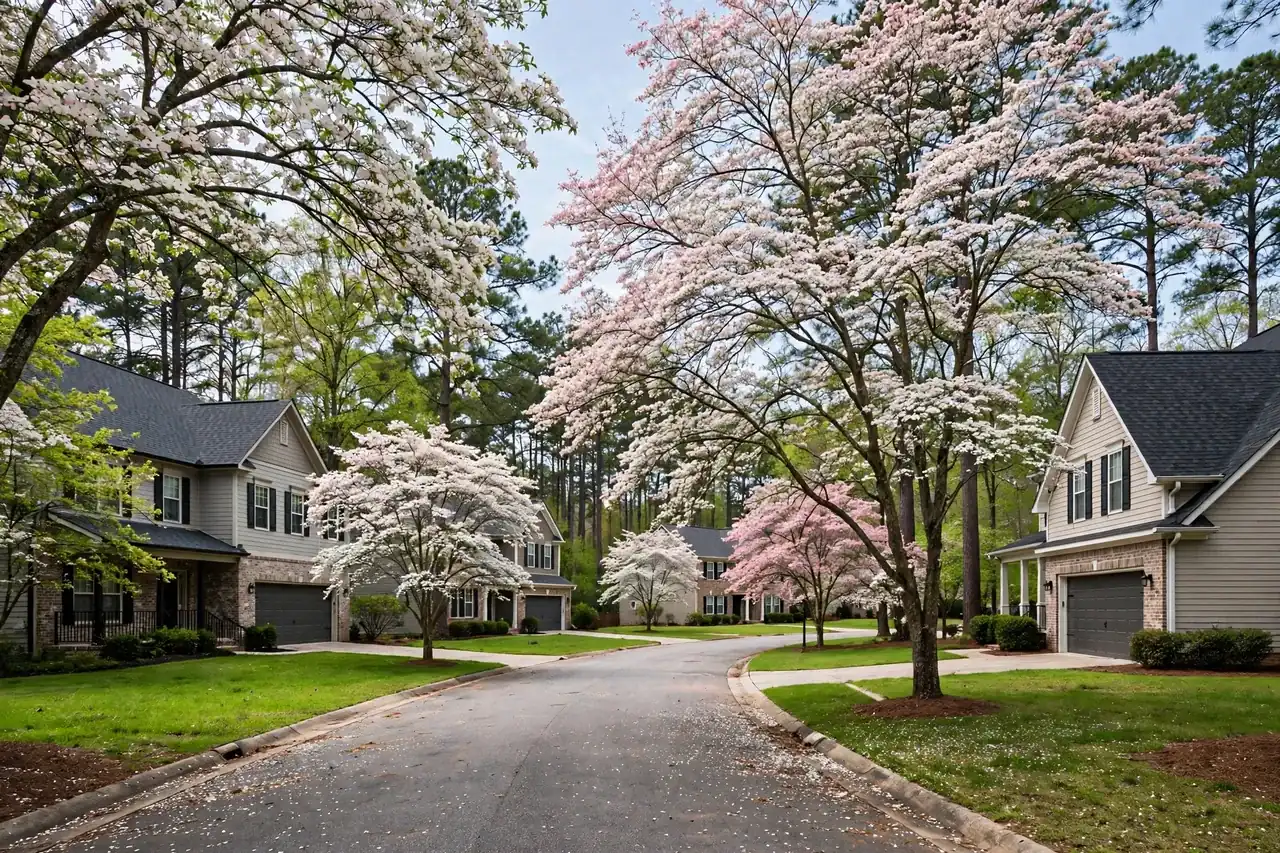
Park-edge roofing angles, all framed as inspection topics, not damage claims: overhanging park trees are not the homeowner’s trees, so who trims what, and how that affects a roofing scope, including permission, access and debris, belongs in the conversation. Tournament and event traffic at a 66-acre park headquarters affects scheduling and material delivery. Lake-adjacent humidity and shade mean algae and moss on shaded slopes near the lake and trails. The “no subdivision name” search angle is this page’s reason to exist: it captures “near Deer Lick Park” searches that subdivision-only competitor pages miss, and it only works if the page stays honest about being a pocket. See roof inspection, roof maintenance and roof repair for the park-edge scopes.
Nearby anchors are not pocket housing: Chestnut Log Middle and the Soccer Complex nearby, and surrounding subdivisions with their own entries, the Slater Mill family to the south, Dorsett Shoals to the south-west, and Carmel Chase off Pope Road. This page links to them and does not absorb their profiles. WellStar Douglas Urgent Care “minutes away” per a venue guide is an unverified distance, so no time is quoted here. Housing age and style, dominant roof material, price tier and HOA rules are all unpublished for the pocket, so the surrounding subdivisions are never assigned a single housing style, material or price and called Deer Lick’s. Park-edge lots “plausibly have higher tree exposure” is inference only, with no lot-level evidence. Pocket-level storm and flood exposure is unpublished, and the park’s lake does not establish residential flood risk, so none is claimed. No school assignment is evidenced for the pocket, so none is assigned. Nearby, see Fairburn Road and Dorsett Shoals, or return to the home page.
Good to know in Deer Lick
Deer Lick Park area is a park-anchored residential pocket. It is never presented as a subdivision, and no subdivision name is invented for it.
Georgia has no state roofing licence (O.C.G.A. § 43-41-17 exemption). A state contractor licence applies only to work over $2,500 or beyond the roofing specialty. We claim no licence number and no manufacturer badges.
Overhanging park trees raise a permission, access and debris question for any roofing scope. Who trims what comes before the material question.
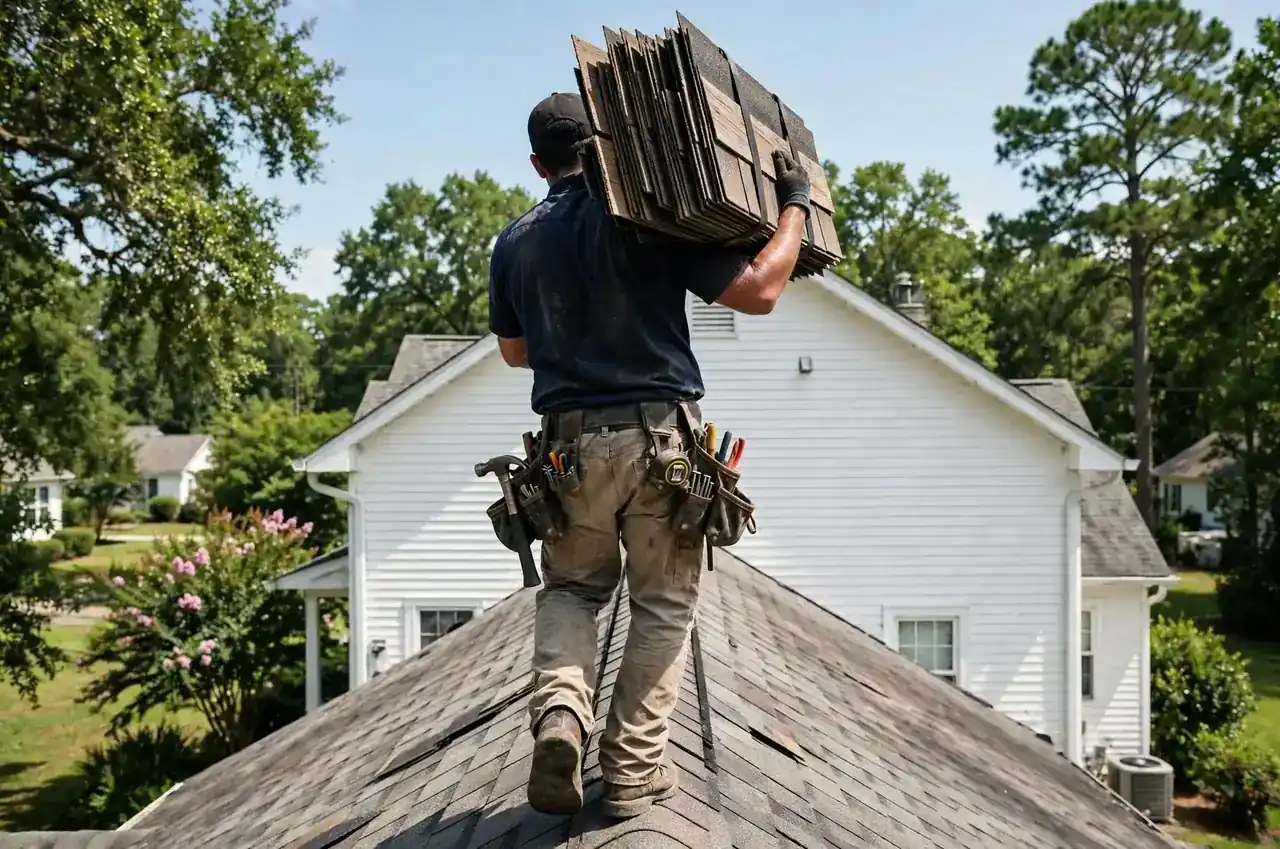
Every Deer Lick Park area roof gets the same first step: we get on it, measure it, and photograph what we find, including the park-edge trees and lake-side shade that shape the scope.
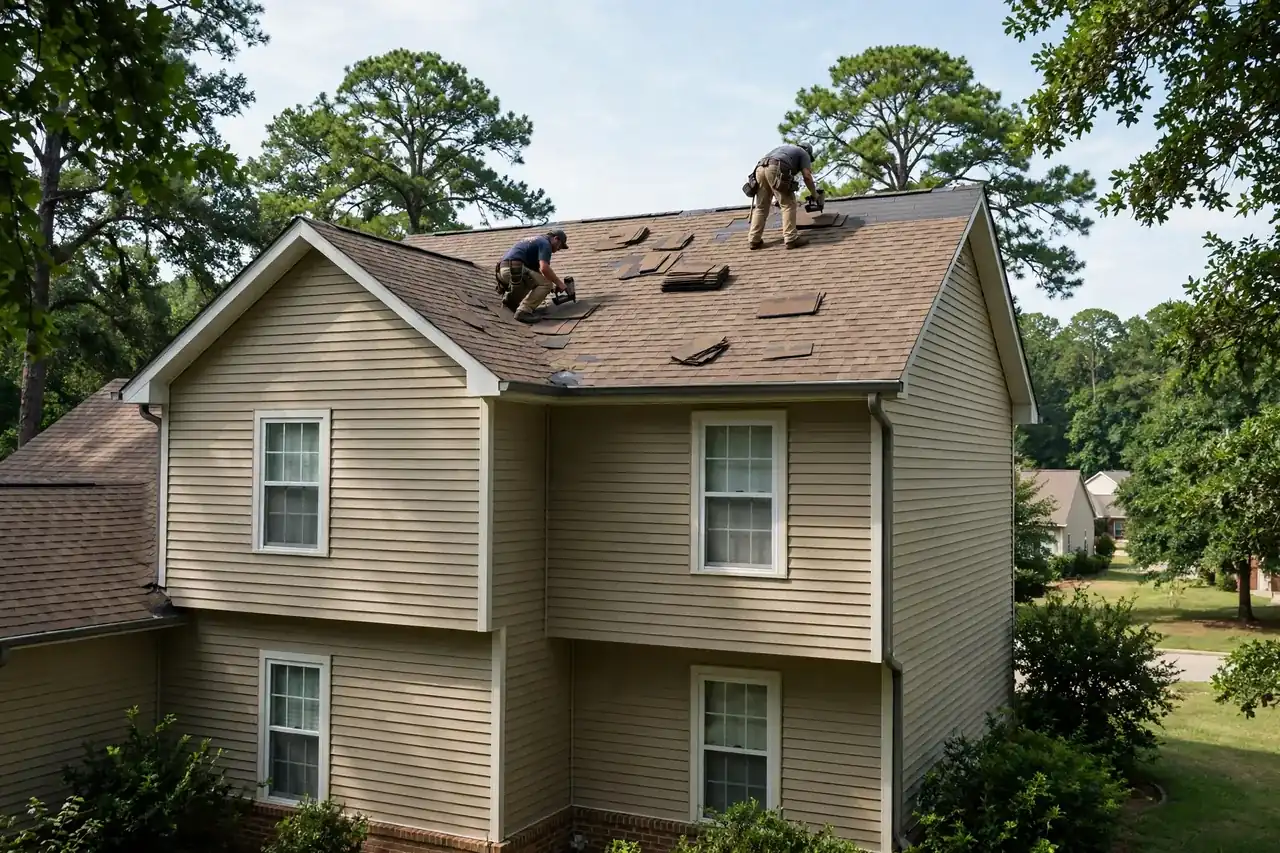
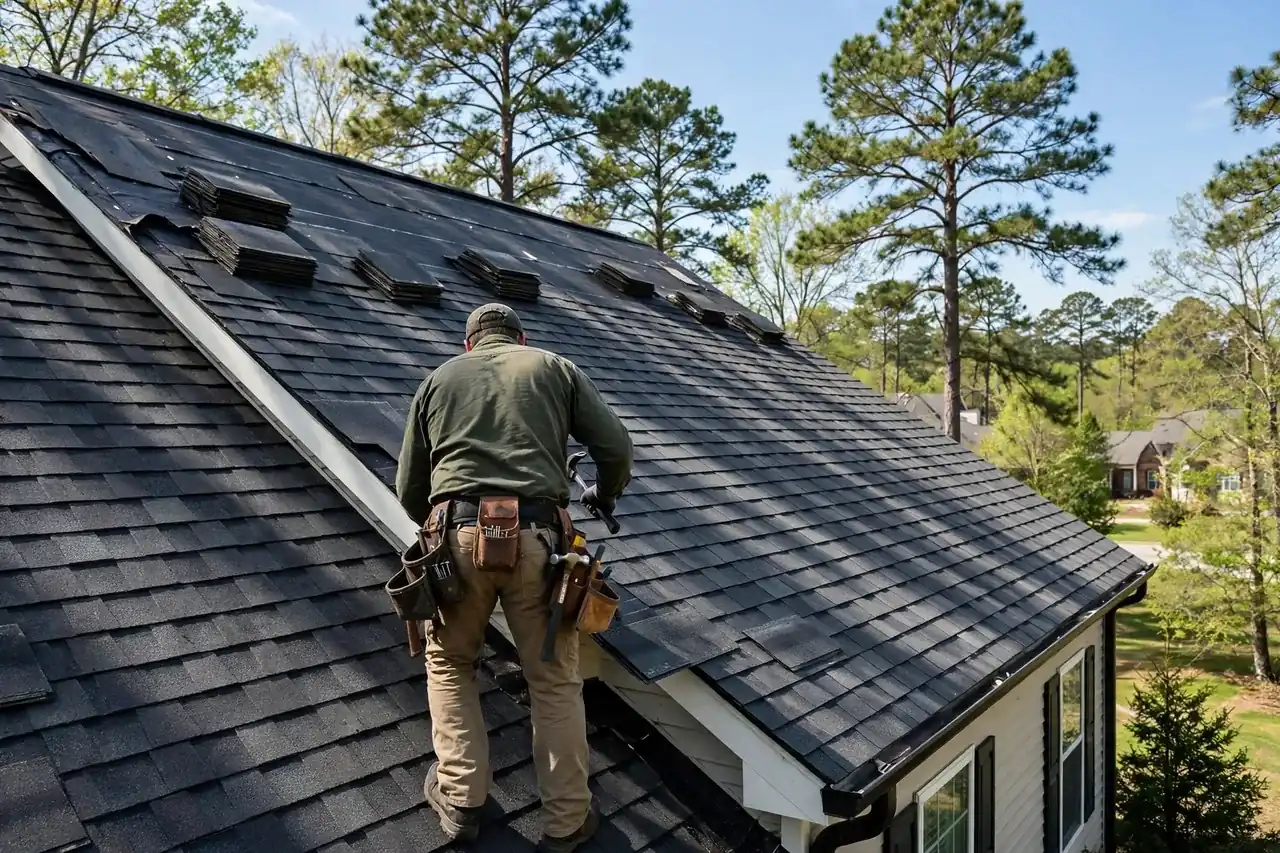
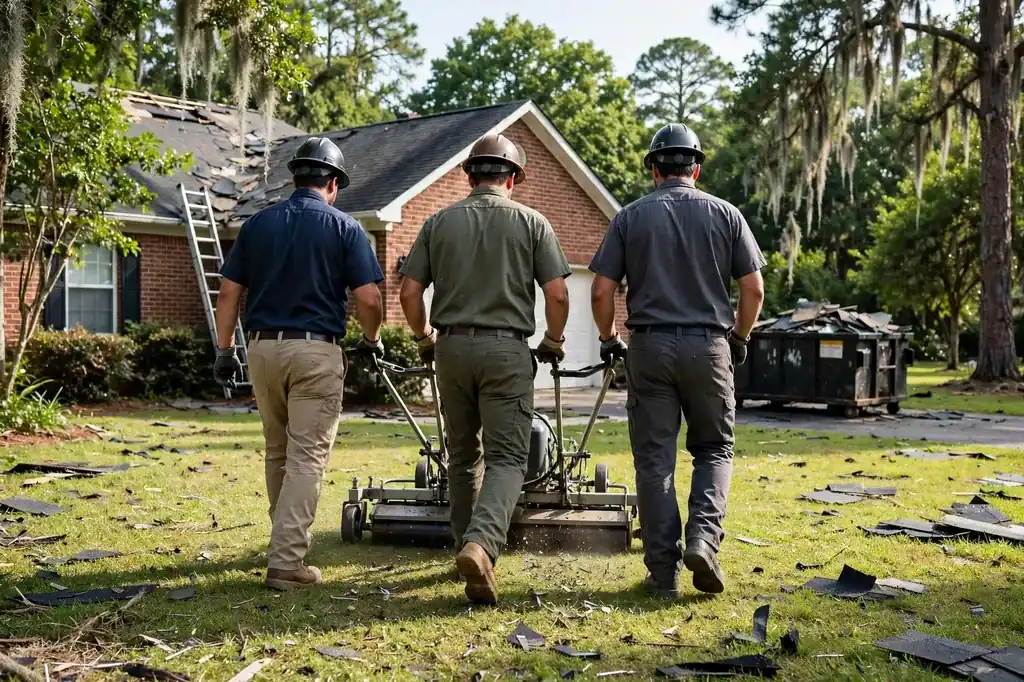
New roof installation in Deer Lick starts with a deck inspection and a nail-by-nail tear-off of the old material.
Full roof replacement in Deer Lick is common on homes 20 years and older, especially where shade has cooked the shingles.
Roof repair in Deer Lick covers missing shingles, flashing failure, chimney leaks, and skylight leaks.
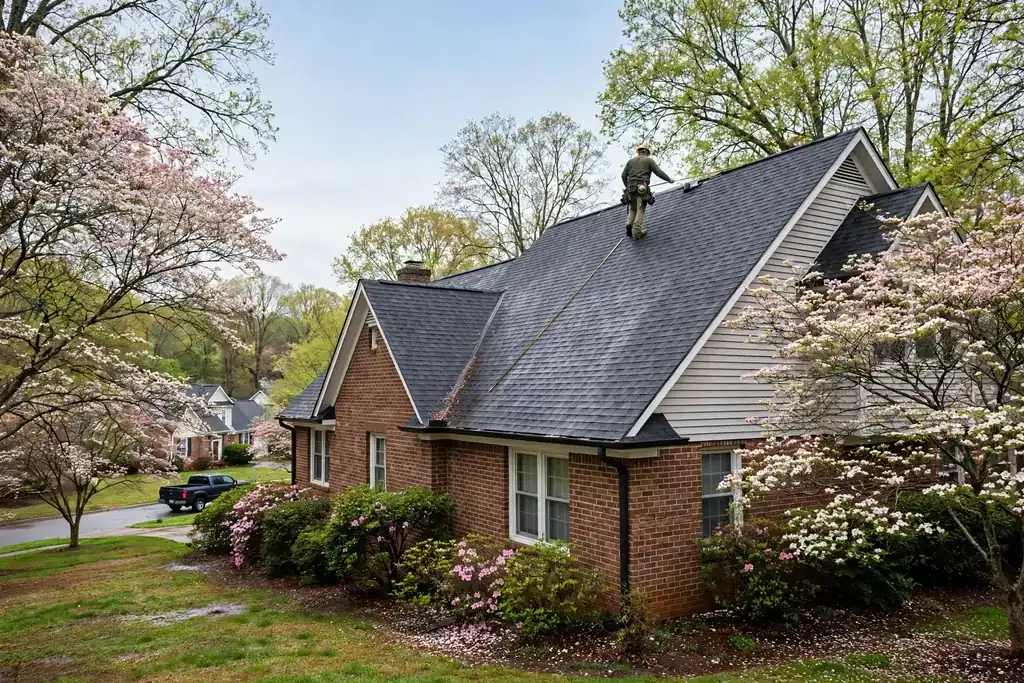
A roof inspection in Deer Lick is a full walk of the roof, attic, and gutters.
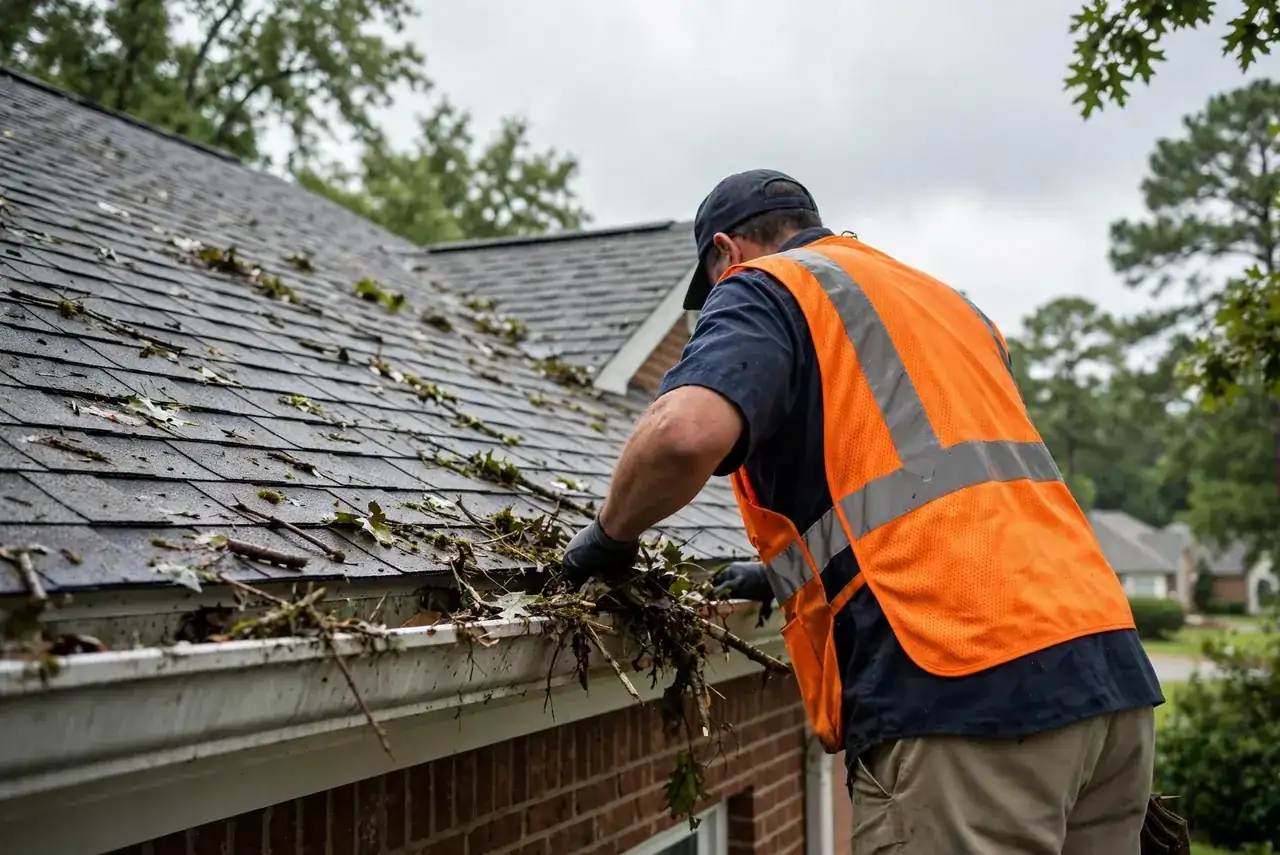
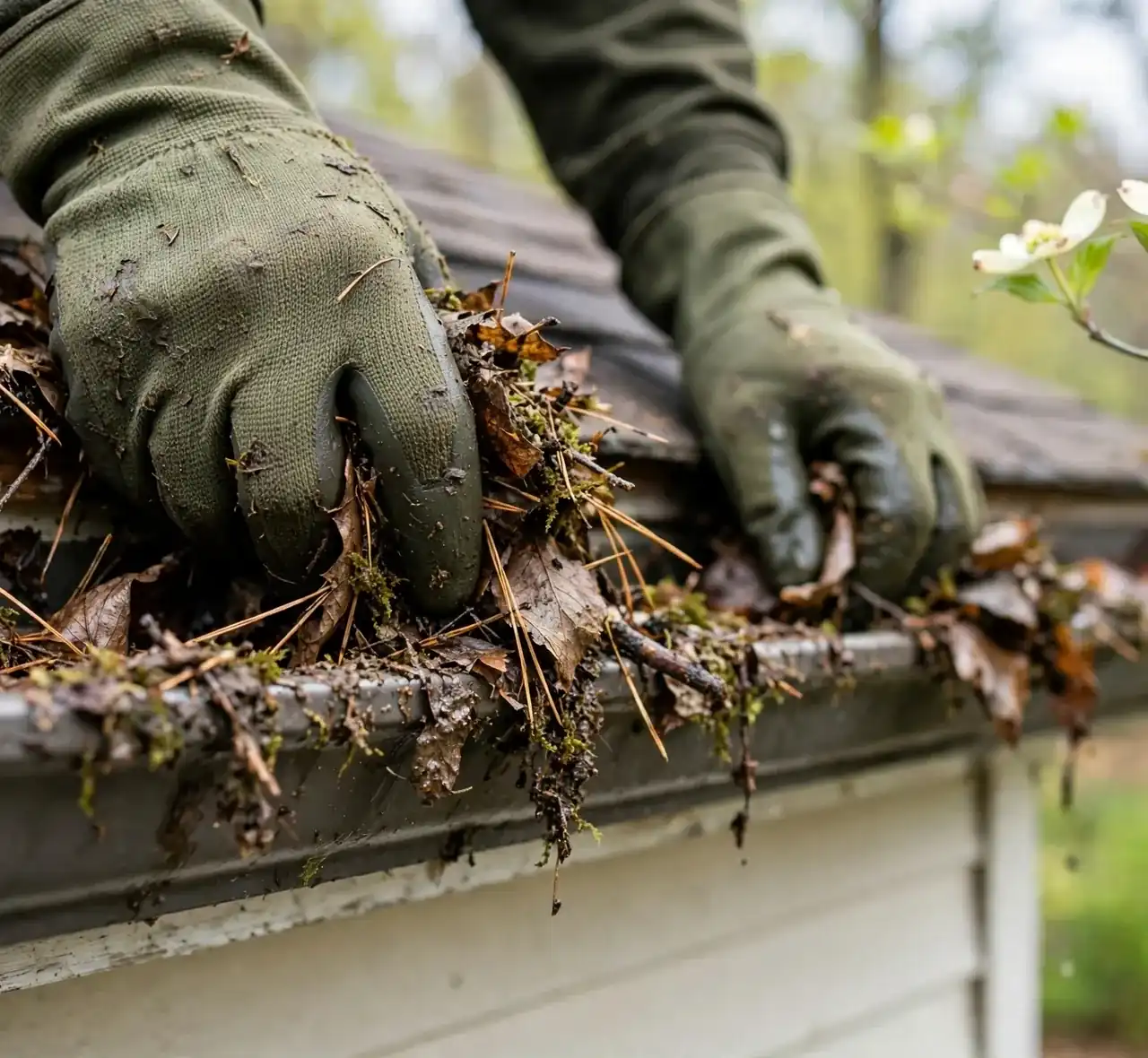
Roof maintenance in Deer Lick is mostly about shade and debris. We clear gutters, pull moss and algae, reseal pipe boots and flashing, and check ridge vent screens.
Shingle roofing is the standard on most Deer Lick homes.
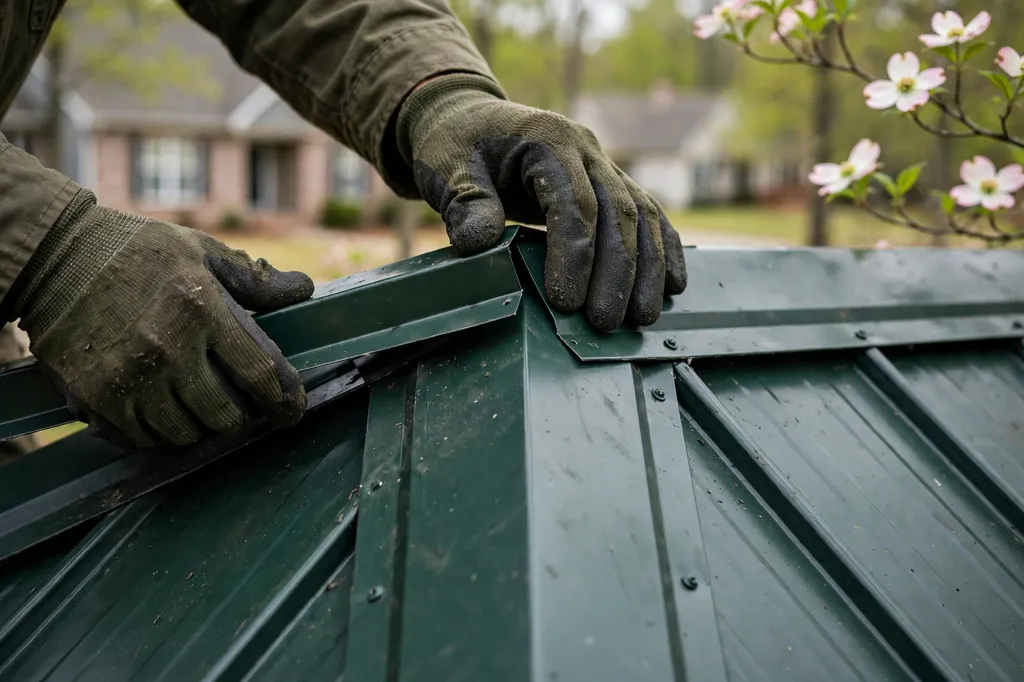
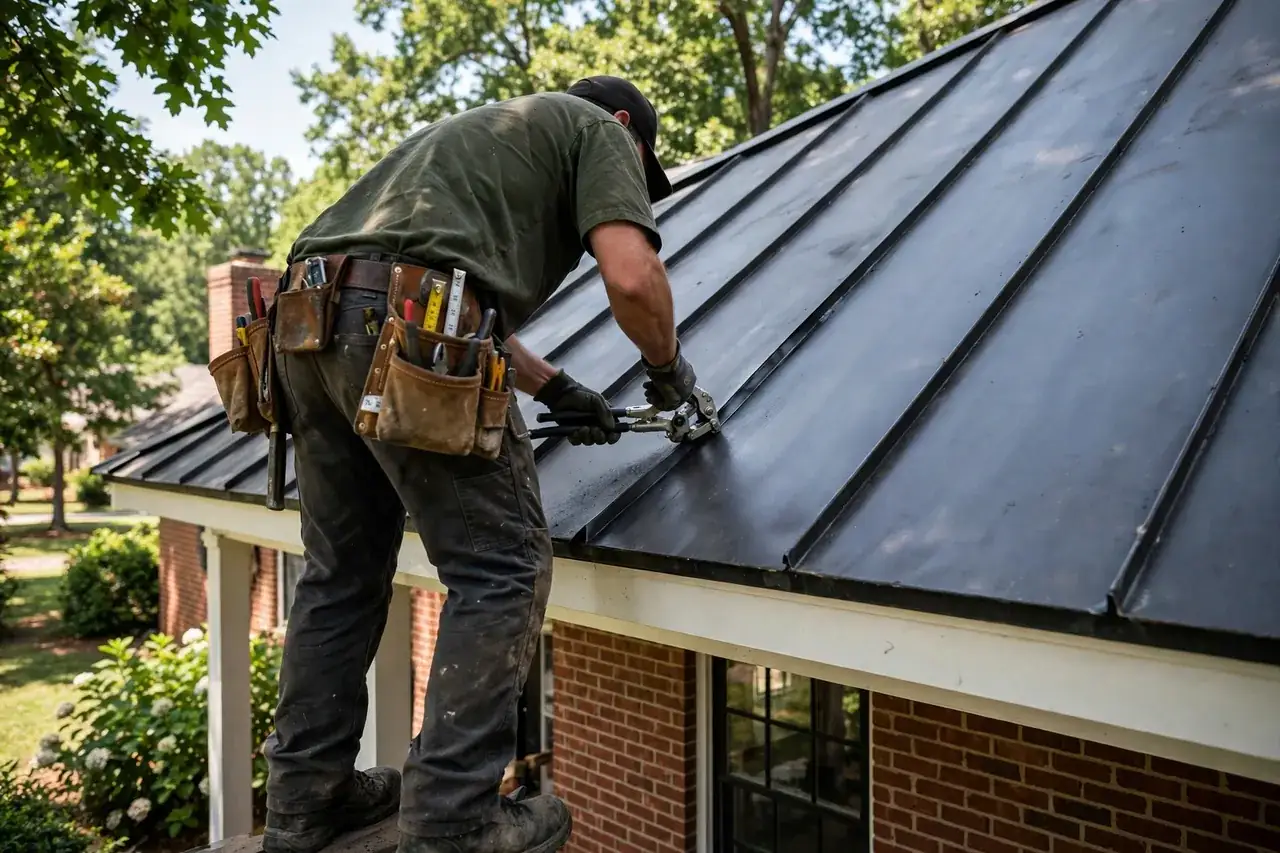
Metal roofing is a strong fit for Deer Lick outbuildings, barns, and homes that want a longer service life.
Tile roofing in Deer Lick shows up on a handful of custom homes and porches.
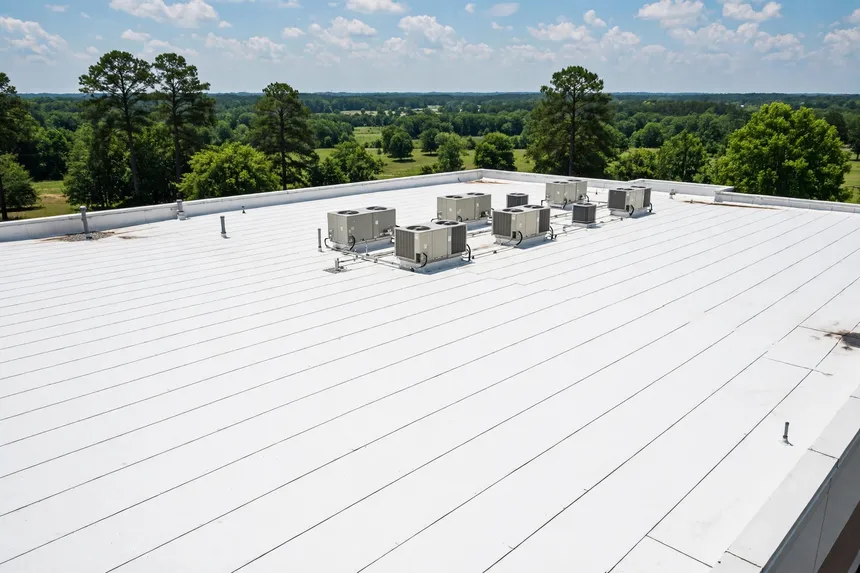
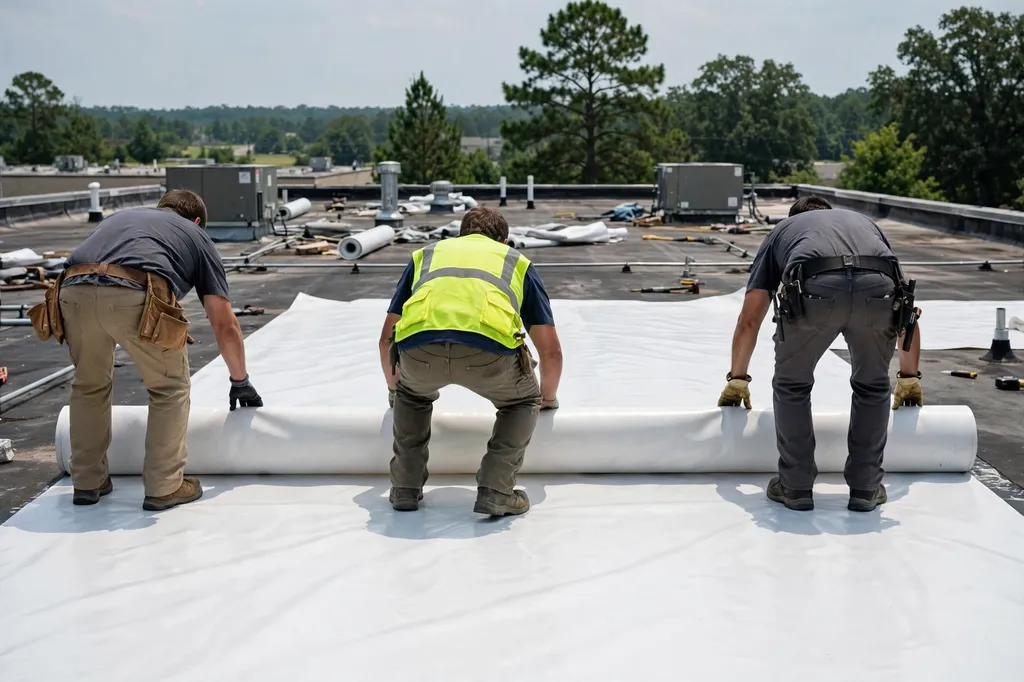
Flat roofing in Deer Lick covers porch roofs, additions, and small commercial buildings. We install TPO membrane and EPDM membrane systems with proper slope, seams, and termination bars.
Commercial roofing in Deer Lick serves shops, churches, and outbuildings along the main roads.
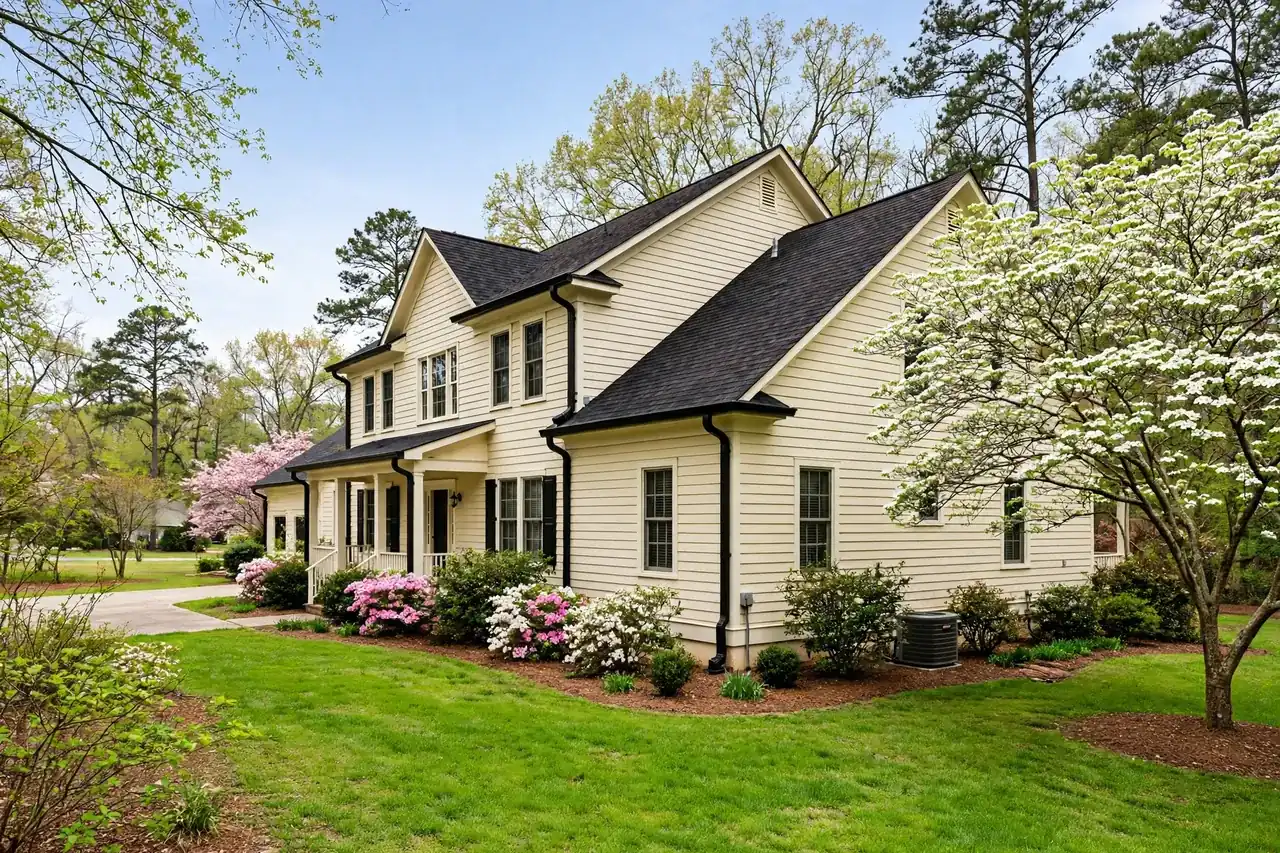
Residential roofing is most of what we do in Deer Lick. That means shingle, metal, and small flat sections on houses, garages, and sheds.
Emergency roof repair in Deer Lick is for active leaks, tree strikes, and wind-opened ridges. If a storm just came through, call before the next rain hits.
Storm damage roof repair in Deer Lick follows the spring and summer squall lines that drop limbs and lift shingles.
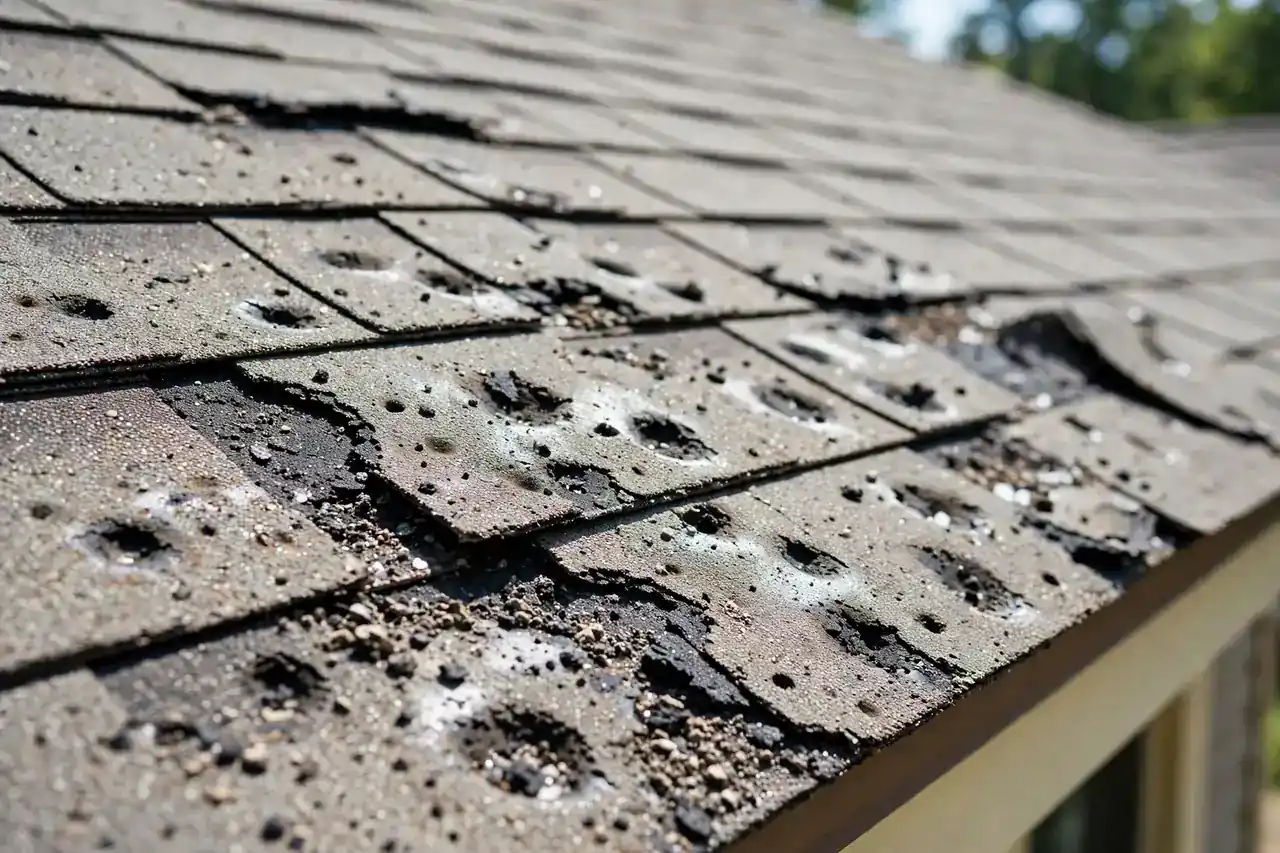
Hail damage roof repair in Deer Lick is about bruised shingles and dented metal. Hail knocks granules loose and cracks the mat, which shortens roof life even if it is not leaking yet.
Wind damage roof repair in Deer Lick covers lifted shingles, torn ridge caps, and missing tabs after a storm.
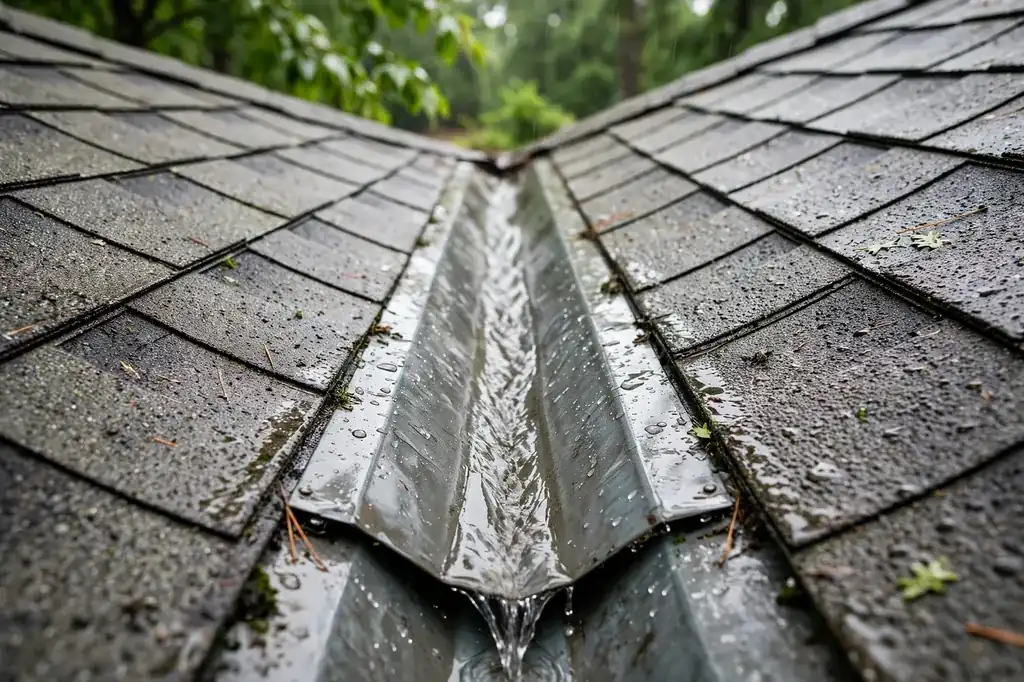
Leak detection in Deer Lick starts in the attic, not on the roof. We use a moisture meter and infrared camera to trace the water path, then get on the roof to confirm the entry point.
Pick a service to see how we approach it here.
New installation in the pocket usually means a new build or an addition near the park. We square the deck, set underlayment and flashing, and schedule deliveries around park event traffic.
Replacement here is scoped lot by lot, because the pocket has no single housing style, material or price. Any permit requirement is confirmed for the address first, since City and County rules differ.
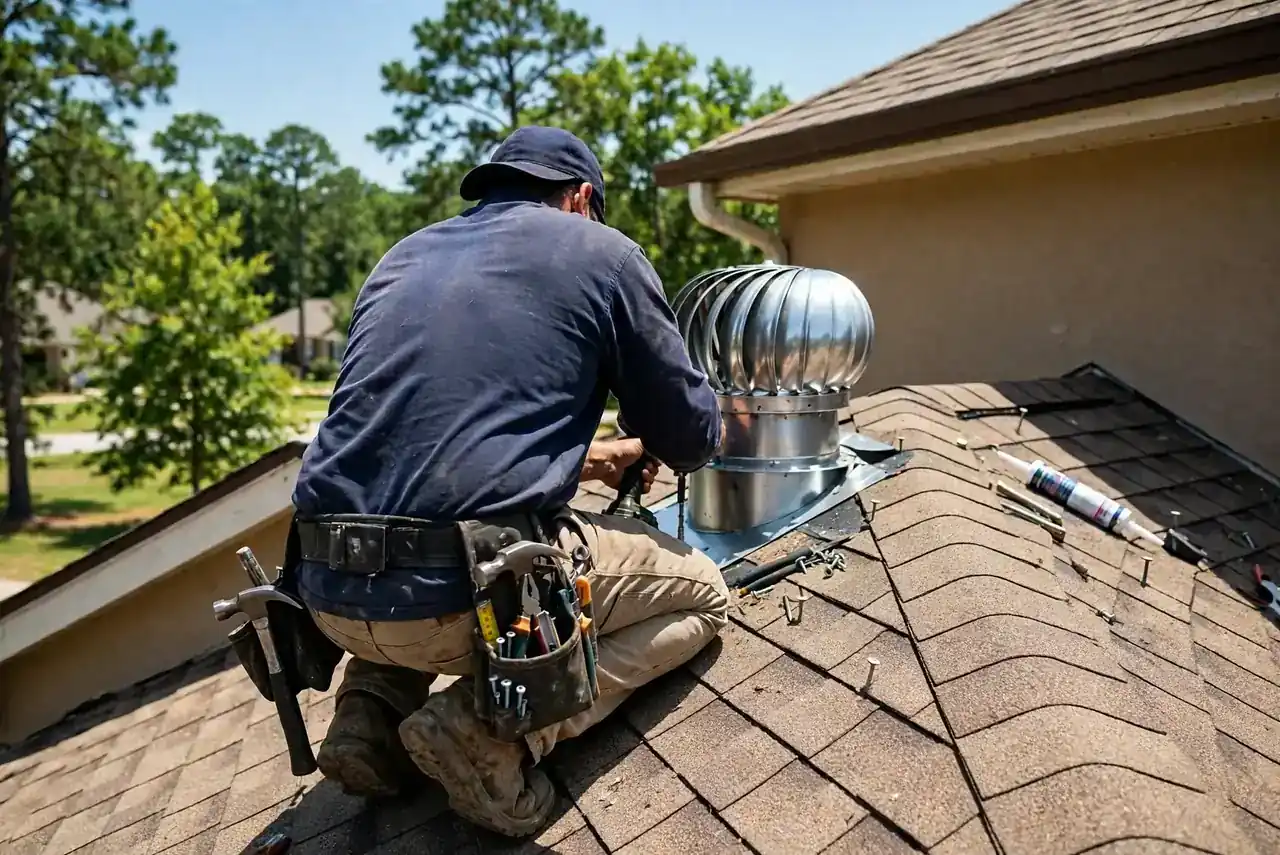
Repair calls are mostly leaks, flashing failure and storm damage on park-edge lots. We trace the water first and settle the park-tree trimming question before pricing the work.
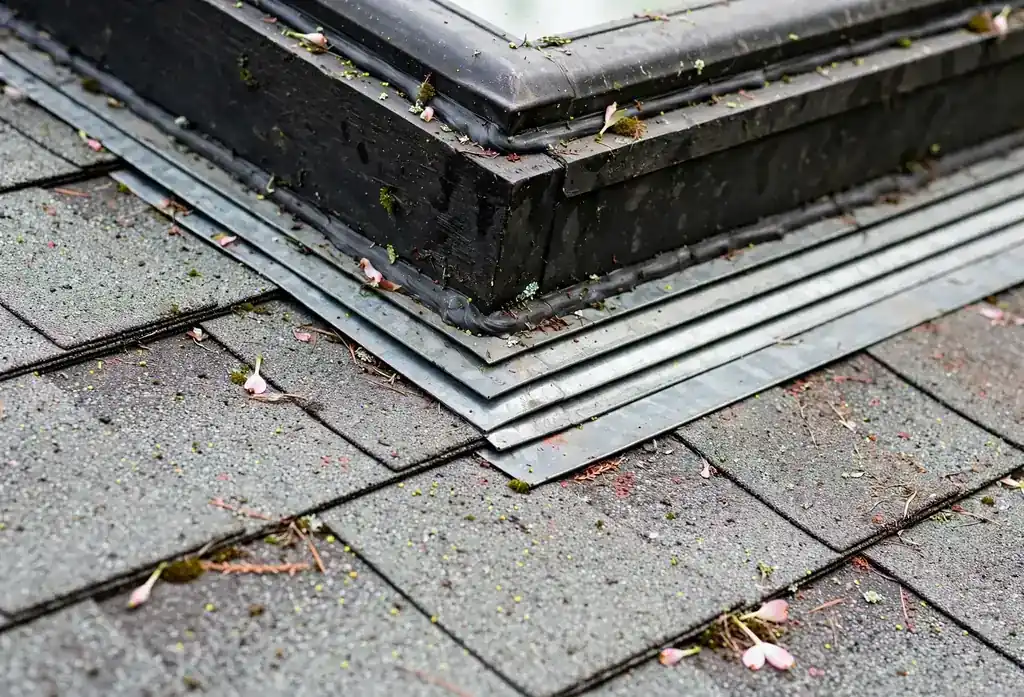
An inspection covers shingles, flashing, valleys, vents, chimney, skylights and gutters, plus an attic check, with extra attention to park-edge debris and lake-side algae and moss.
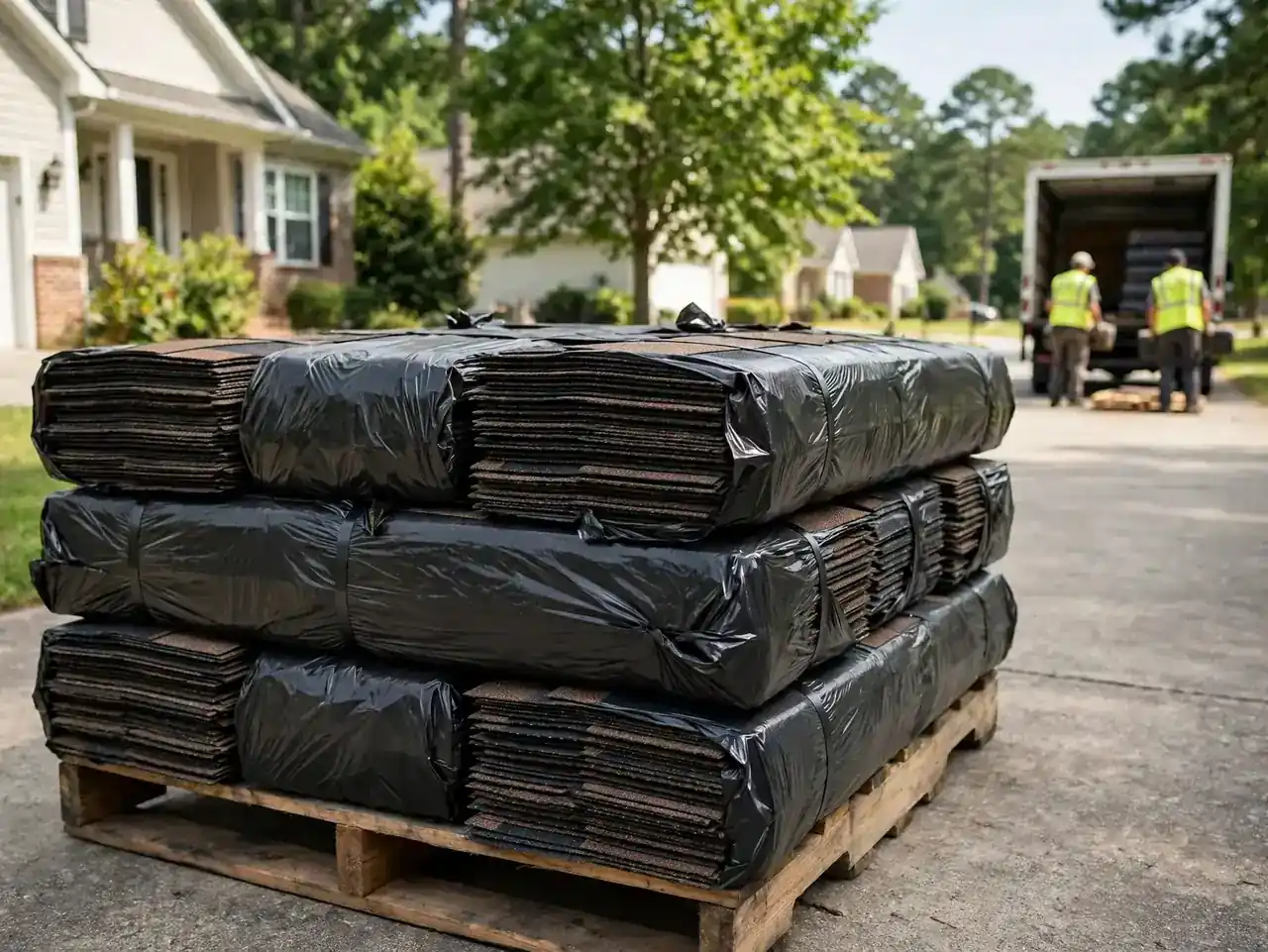
Deer Lick Park area homes need park-edge inspection; the park itself needs scheduling and access planned around events.
Pocket homes need park-edge scopes: tree permission, debris loads and lake-side shade, priced lot by lot.
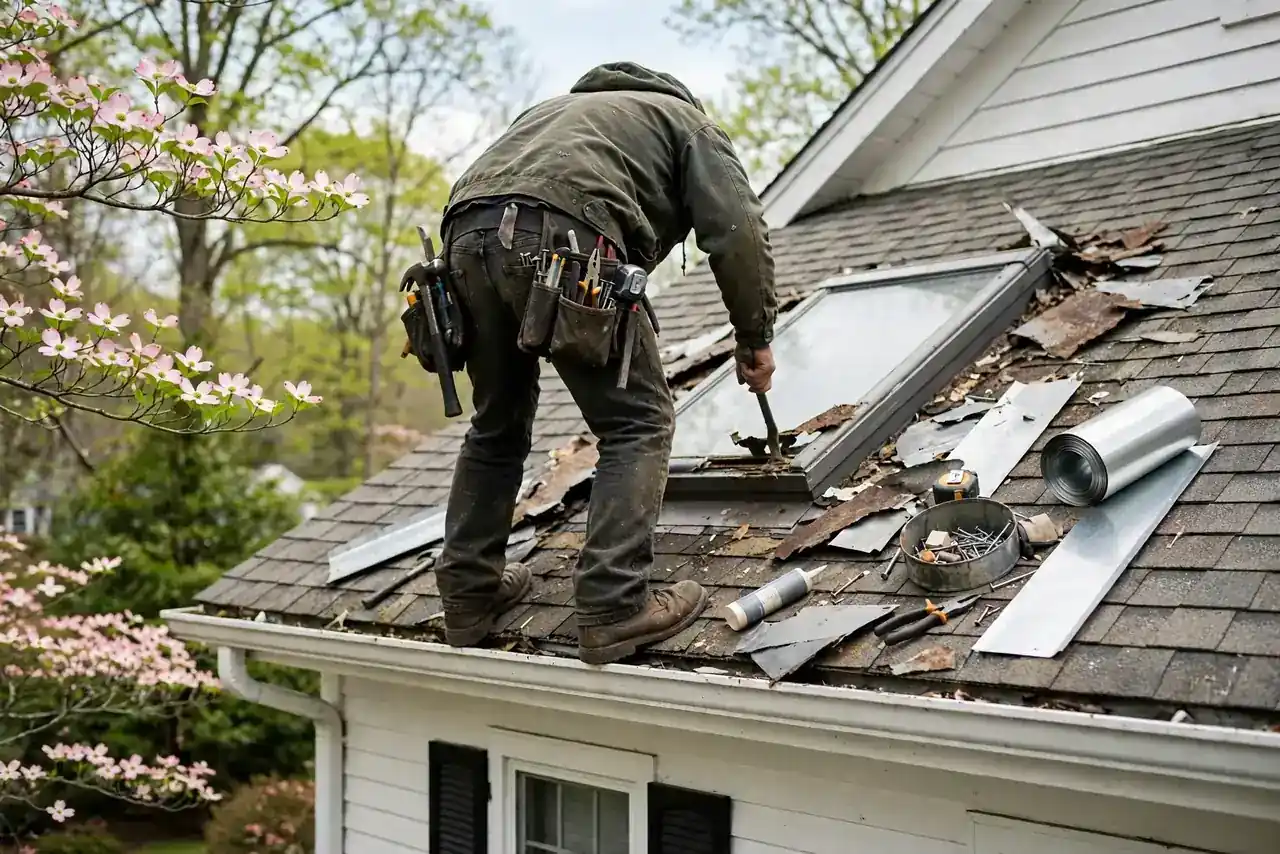
Park-adjacent work needs event-aware scheduling and delivery planning that a subdivision page never mentions.
Deer Lick Park area problems come from park-edge trees, lake-side shade, and event traffic, not from a single subdivision defect.
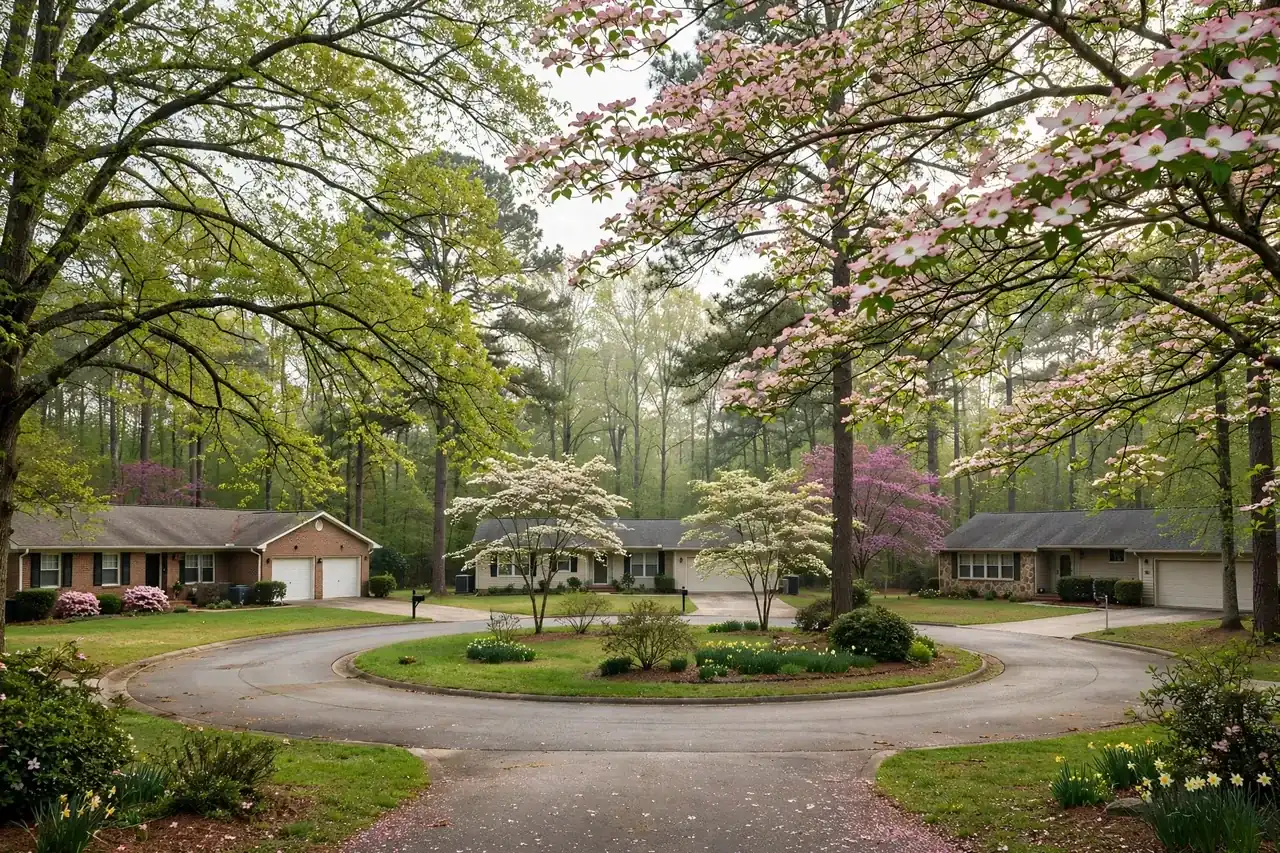
Overhanging park trees drop debris and raise a trimming-permission question. The scope must settle who trims what before work starts.
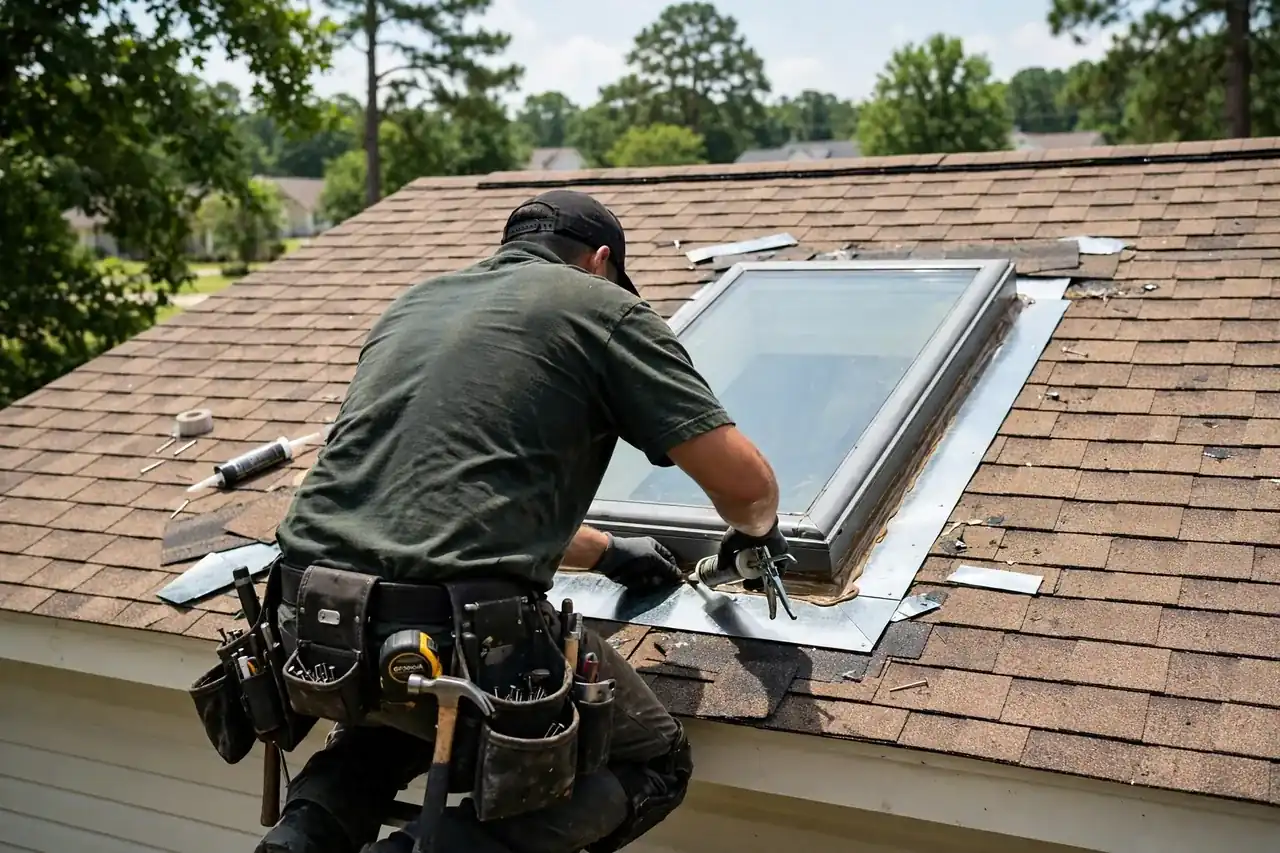
Lake-adjacent humidity and shade grow algae and moss on shaded slopes near the lake and trails. Growth lifts shingle edges and holds water.

Tournament and event traffic at a 66-acre park headquarters affects scheduling and material delivery. Dates are planned around events, not through them.
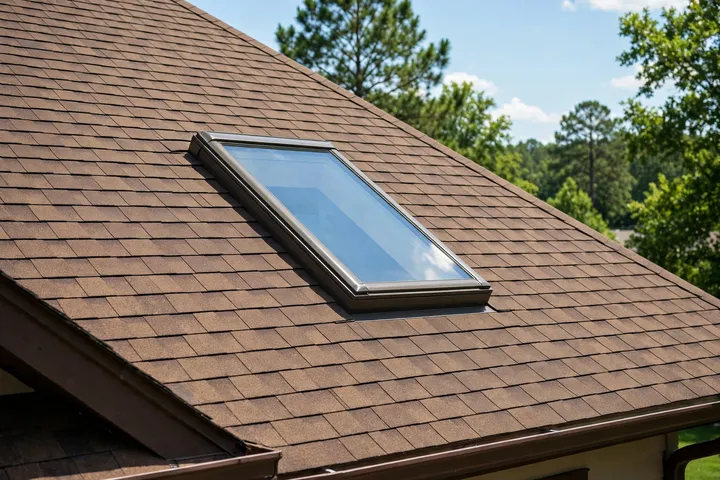
With no published housing style, material or price for the pocket, every roof is inspected on its own merits rather than priced from a neighbourhood average.
Watch for ceiling stains, granule loss, curling shingles, attic dampness and park debris in the valleys before the next storm.
Any one of these is worth a call.
Nothing picked yet. Tap the signs you have noticed and this box will sum them up.
We use the park, Mack Road and the surrounding streets to orient crews. Tell us you are near Deer Lick Park or Mack Road and we will find the right pocket fast.
Landmark
Deer Lick Park, 2105 Mack Road, is a 66-acre park and headquarters of the Parks and Recreation Division, and the pocket’s anchor.
Landmark
Mack Road carries the park, north of Fairburn Road, and bounds the pocket on the park side.
Landmark
Slater Mill Road runs to the south of the pocket, toward the Slater Mill family of subdivisions.
Landmark
Fairburn Road runs to the south of the pocket, toward the Fairburn Road South pocket.
Landmark
Pope Road bounds the pocket and carries Carmel Chase, a neighbouring subdivision with its own entry.
Commercial area
Chestnut Log Middle and the Soccer Complex sit nearby, as anchors, not as pocket housing.
Transit
The park’s 3-acre lake with a pier drives lake-side humidity and shade, with no residential flood claim attached.
They were very responsive and answered all my questions while making me feel at ease. I would highly recommend their services.
Deer Lick Park area roofing runs on a seasonal clock: spring storm checks, summer park events, autumn debris, and winter leak calls.
The Deer Lick Park pocket sits among several kept pages, and the pages below cover the subdivisions around it.
Straight answers to what people ask first.
As Oct-2026 published market ranges, by measured roof area: shingle replacement $3.50-$10.70 per sq ft, a typical 2,000 sq ft roof $9,600-$16,000, emergency repairs $400-$1,500, metal $8.00-$15.50 per sq ft, and TPO $4-$12 per sq ft. These are market ranges, not a Finnegan quote; your written estimate follows a roof measurement.
Permit rules differ between the City of Douglasville and unincorporated Douglas County, and they are confirmed before quoting. We do not quote a fee or a blanket trigger here; we confirm the requirement for your address before work starts.
Georgia has no state roofing licence (O.C.G.A. § 43-41-17 exemption). A state contractor licence applies only to work over $2,500 or beyond the roofing specialty. We claim no licence number and no manufacturer badges.
Our hours are Monday-Friday 8 AM-5 PM; Saturday and Sunday closed. Call +1 678-751-2052 during working hours for leaks or storm damage; after-hours messages are returned first thing the next business morning.
If you have a leak, a storm-damaged roof or a replacement you have been putting off, call Finnegan Services LLC at (678) 751-2052.
Call us at +1 678-751-2052 or send a message and we will get back to you the same business day. Our hours are Monday-Friday 8 AM-5 PM; Saturday and Sunday closed. We answer the phone during working hours and return after-hours messages first thing the next business morning.